

Report from the ASEAN International Coffee Summit 2026, Singapore, 4–6 November
Part 1: A first-of-its-kind summit for ASEAN coffee
What does it take to keep ASEAN coffee competitive in a changing global market? This question was central to the inaugural ASEAN International Coffee Summit (AICS), held in Singapore from 4 to 6 November 2026.
Co-organised by the ASEAN Coffee Federation (ACF) and the Singapore Coffee Association, the summit brought together more than 1,500 delegates and was supported by over 20 international coffee associations. Under the theme, “From Origin to Opportunity: Connecting Global Standards, Trade and Knowledge,” producers, traders, roasters and policymakers explored market developments, trade opportunities, traceability, emerging varieties such as Liberica, Excelsa and Robusta, and the EU Deforestation Regulation (EUDR). Beyond the conference floor, the summit hosted the ASEAN Coffee Excellence Awards and saw new partnerships signed, including a cooperation agreement between Rwanda’s export board and the Singapore Coffee Association.
The Team Europe Initiative on Deforestation-free Value Chains (TEI) took part in the regional conversation on EUDR readiness. This builds directly on the momentum earlier this year, when nearly 100 coffee stakeholders joined a regional webinar and the ACF Board approved an ASEAN Learning Community on Market Policy. Read the earlier story here.
Part 2: The EUDR clock is ticking for ASEAN coffee
On the summit’s second day, the International Coffee Organization (ICO) and the European Coffee Federation (ECF) highlighted the implications of on Europe’s evolving regulatory landscape for ASEAN exporters. As Eileen Gordon, General Secretary of the ECF, put it:
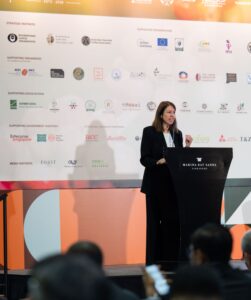
The question is how the recent changes mean in practice for market access, traceability, compliance and future opportunities and how ASEAN coffee can remain competitive and well positioned in the EU market.
Ms. Eileen Gordon, General Secretary of European Coffee Federation
Under the EUDR, coffee placed on the EU market must be deforestation-free, legally produced and backed by a due diligence statement, including the geolocation data for the plots where it was grown.
For ASEAN’s coffee sector, meeting these requirements presents practical challenges. ASEAN coffee is largely grown by smallholders, and SMEs and traders often source from hundreds of farmers across multiple provinces. Collecting accurate plot-level geolocation data, assessing deforestation and other risks, proving compliance with local laws, and tracing coffee through aggregation points back to individual farms.
A survey of 25 Southeast Asian coffee stakeholders conducted ahead of the February 2026 webinar found that, despite high awareness of the EUDR, many businesses had not used a single compliance tool. The barriers included uncertainty about which tools to trust, how to apply them and whether they were affordable.
Legality adds another layer. Evidence of land tenure and compliance with local law can sit with different agencies in different formats, and many smallholders may not hold the documents that European buyers now expect to see. Each of these gaps is manageable, but none can be closed by a single company working alone.
With the first application date approaching, the question for ASEAN coffee is no longer whether to prepare, but how to prepare together.
Part 3: From challenges to solutions, and why a Learning Community matters
The largest EUDR implementation challenge is operational – not regulatory. Good preparation depends on multistakeholder engagement, data quality, good governance and scalable processes that are not costly and smallholder oriented.
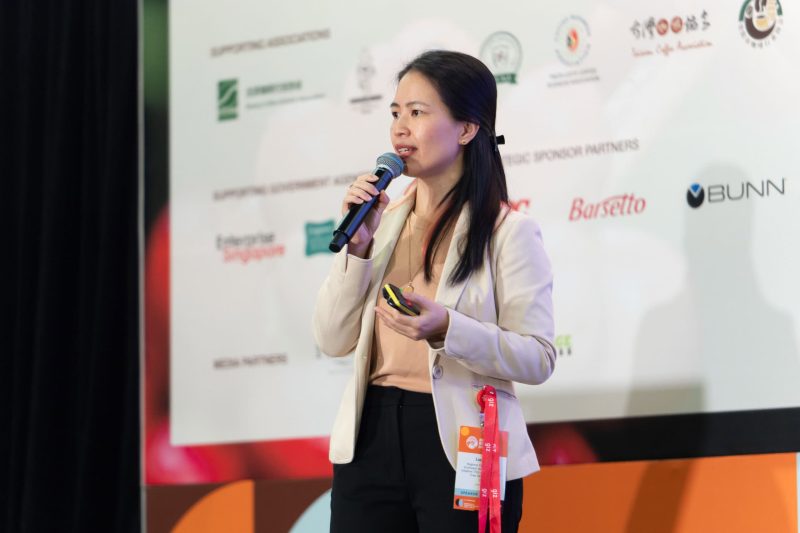
Ms. Linh Thi Bui – the TEI’s SEA Regional Coordinator presented digital solutions developed by TEI partners, including FAO, ITC, EFI, GIZ and DIASACA. These free, open-source and farmer-focused resources support four key areas of EUDR preparation:
- Geolocation
- Deforestation-risk assessment
- Legality compliance
- Traceability
Read more about the digital solutions here.
Across 37 countries, TEI flagship projects have produced resources that are freely available on the Zero Deforestation Hub and will also be hosted on the ACF Regional Knowledge Hub.
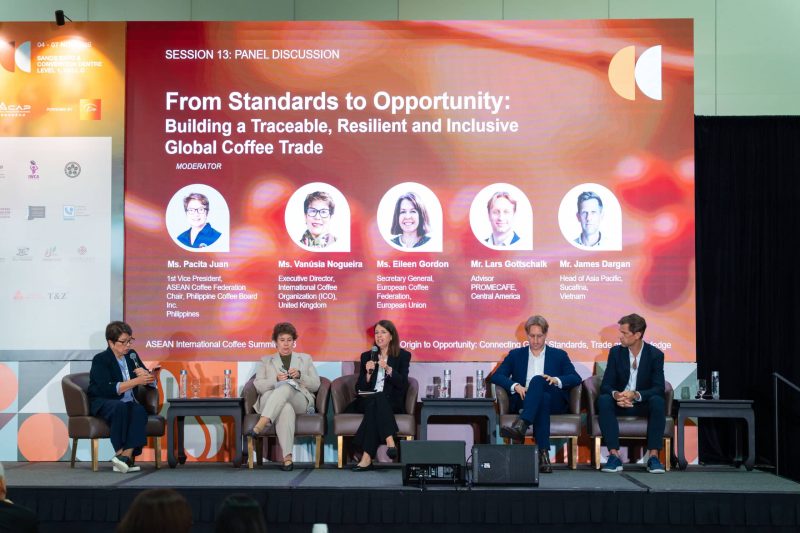
Tools alone are not enough, which is why the Coffee Learning Community idea resonated strongly. Mr. Lars Gottschalk, a representative from PROMECAFE, shared insights from Mesoamerica, where an EUDR Learning Community, facilitated with partners including GIZ and the Committee on Sustainability Assessment (COSA), brings producers, exporters and institutions together to address compliance questions. A similar approach is emerging in Africa through the African Fine Coffees Association.
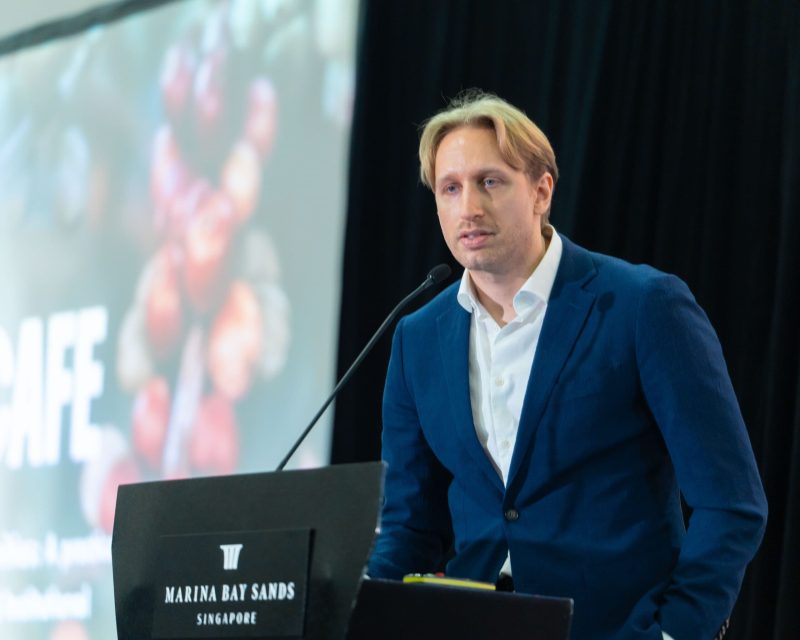
For PROMECAFE, what started as a response to the information needs created by the EUDR has grown into much more: a platform that strengthens its services to members, expands its visibility and outreach, and fosters closer relationships between coffee-producing countries and European and other international stakeholders — with PROMECAFE as a trusted facilitator.
Lars Gottschalk, PROMECAFE
TEI strongly advocates for the ASEAN Coffee Learning Community on Market Policy. Supported by the ACF Board and initiated in February 2026 with the ICO Coffee Public-Private Task Force, TEI, and ECF, it offers a structured regional platform for peer exchange, compliance guidance and shared tools. It is designed to be larger than the EUDR itself, treating traceability, data systems, legality and smallholder inclusion as interconnected issues, which, for an SME source from hundreds of farmers, they are.
The invitation is open to exporters, traders, cooperatives, national associations and government agencies across region to participate in the ASEAN Coffee Learning Community on Market Policy. Answer this survey and get updated with the upcoming webinar by December 2026.


