Denmark joins the Team Europe Initiative on Deforestation-Free Value Chains

At COP31 in Antalya, Denmark formally joined the TEI, expanding its existing commitment to forest protection and deforestation-free supply chains.

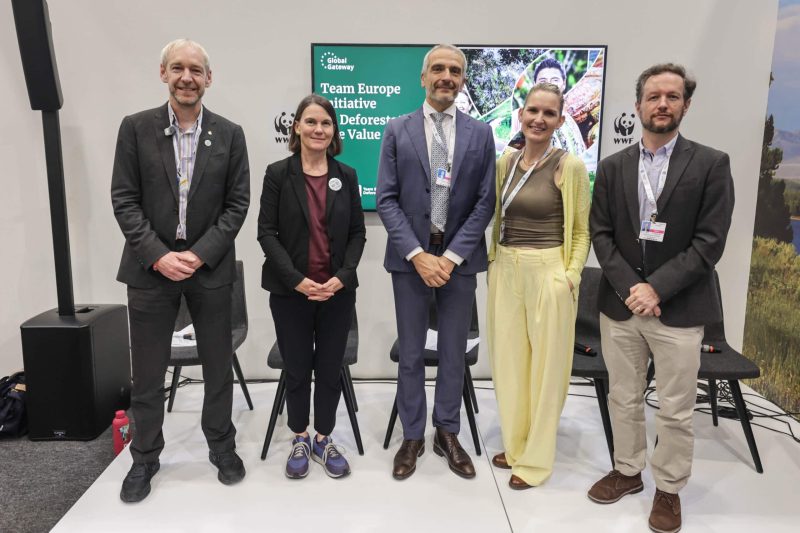
On 19 November 2026, Denmark formally joined the Team Europe Initiative on Deforestation-Free Value Chains (TEI) at COP31 in Antalya, Türkiye. This was just over a month before the EU Deforestation Regulation (EUDR) enters into application. With Denmark, the TEI is now supported by the EU, Germany, France, the Netherlands, Spain and Sweden. Belgium, Italy, Slovenia and Finland take part as observers.

I am pleased that Denmark is joining the Team Europe Initiative on Deforestation-free Value Chains. Team Europe is playing a leading role in delivering on protecting nature and building resilience in the local communities while at the same time securing our economies. It is a priority for Denmark to work closely with producer countries, and specifically small-scale farmers, to ensure that no one is left behind.

By joining, Denmark underlines its commitment to the international target of halting deforestation by 2030. It also commits to promoting sustainable supply chains and supporting countries that produce commodities covered by the EUDR.

Joining the TEI expands Denmark’s existing forest agenda. In 2024, Denmark adopted its Tropical Forest Initiative to reduce deforestation and forest degradation, protect biodiversity and promote sustainable development. As part of this, Denmark contributes 150 million Danish kroner to the Amazon Fund for 2024–2026 and 116 million Danish kroner to Ethiopia’s flagship forest programme RIP II. In Uganda, Denmark supports smallholder coffee producers in the transition to agroforestry and in meeting EUDR requirements. Its flagship programme Green and Inclusive Growth in Uganda’s Agri-Food Systems (GRASP) has already mapped more than 750,000 coffee fields for EUDR compliance.

Birgit Pickel, Director General at the German Federal Ministry for Economic Cooperation and Development (BMZ), welcomed Denmark as a new member: “Having Denmark on board will significantly strengthen the TEI on deforestation-free value chains and send an important signal as we enter the EUDR’s implementation phase.”

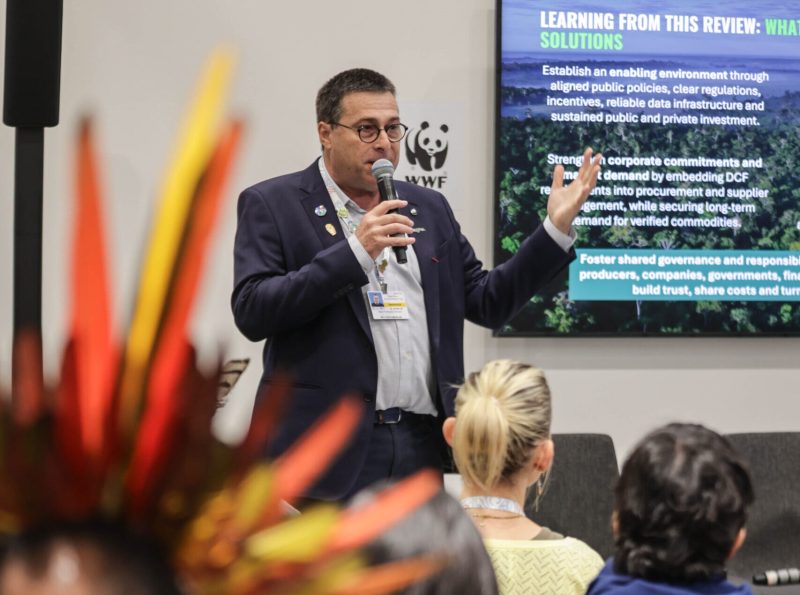
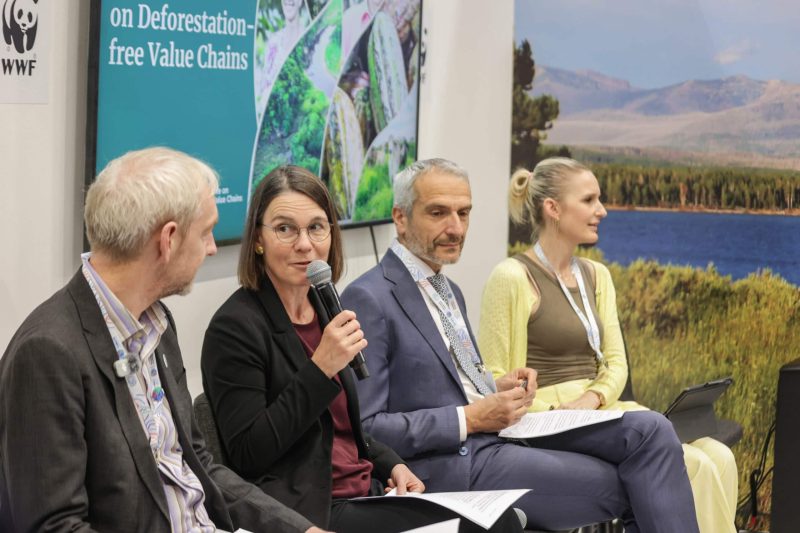
The announcement opened a COP31 event on the launch of the second edition of WWF’s report “Time to Act”. The report presents solutions for deforestation- and conversion-free supply chains for beef, timber, coffee, cocoa, palm oil and Brazil nuts.

Read the full press release.
Region:

Luwero, Nakaseke, Kassanda, Mubende, Bukomansimbi, Kyotera, Omoro, and Nwoya

Target group:

Smallholder farmers, traders, state and non state actors, and processors

Key activities:
  • Capacity building of smallholder coffee farmers in production practices and sustainable land use management.
  • Establishing traceability system and facilitating access to sustainable financing 
  • Facilitate inclusive business partnerships between producer organizations and supply chain actors​ 
  • Promote multi-stakeholder cooperation​ 
Commodities:
Region:

Huánuco, Ucayali, Pasco and Junín

Target group:

Public and private stakeholders, especially exporting companies, cooperatives and smallholder producers

Key activities:
  • Strengthen the supply chains to meet EUDR requirements 
  • Facilitate access to sustainable finance and knowledge exchange
  • Training of smallholders to sustainable manage their production systems 
Commodities:
Region:

Ngozi and Kayanza 

Target group:

Smallholders

Key activities:
  • Training on the use of traceability tools and support on collection of geolocation data for EUDR compliance 
  • Support the development of a national coffee sector dashboard for traceability and transparency
  • Capacity building of smallholder coffee farmers in production practices and sustainable land use management.​ 
Commodities:
Region:

Centre, South West, Littoral, South, East and West regions

Target group:

Smallholder farmers, women, youth, and indigenous peoples

Key activities:
  • Develop inclusive business partnerships with the private sector 
  • Facilitate access to finance for sustainable business models 
  • Support and train farmers in open-source traceability systems 
  • Promote multistakeholder dialogues to improve legal and regulatory provisions 
Commodities:
Region:

(Lower) Kafue Catchment Ecosystem

Target group:

Farmers and community forest management groups

Key activities:
  • Support community forest management groups in the
    sustainable management of natural resources and livelihood creation
  • Support farmers to produce soy in line with the EUDR and increase productivity, and implement transparency and traceability pilots
Commodities:
Region:

Lampung, West Kalimantan, and Central Sulawesi

Target group:

Smallholder farmers, private sector, and civil society organizations along the value chains

Key activities:
  • Empowering Smallholder Farmers and Farmer Organizations by facilitating traceability and legality, building capacity on Good Agriculture Practices (GAP), and strengthening farmer organizations, ensuring inclusive support for both men and women farmers.
  • Promoting sustainable practices and collaboration by supporting village HCV/HCS conservation efforts, testing and strengthening the National Dashboard for traceability and legality, and fostering national and regional exchanges.
Commodities:
Region:

Son La, Gia Lai ​​

Target group:

Smallholder farmers and marginalized groups

Key activities:
  • Support coffee value chain actors
  • Foster deforestation-free, sustainable, and legal supply chains
Commodities:
Region:

Yangambi Biosphere Reserve, Salonga National Park North, Salonga National Park South, Virunga National Park, Kahuzi-Biéga National Park​

Target group:

Public and private sector

Key activities:
  • Promote sustainable agricultural practices
  • Minimize forest degradation
  • Prevent deforestation
Commodities:
Region:

Provinces of Orellana and Sucumbíos

Target group:

Smallholder farmers, women, indigenous people and youth

Key activities:
  • Promoting Multi Stakeholder Dialogues
  • Improving traceabilty systems
Commodities:

Implementation ended July 2026

Region:

Xingu territory, State of Pará

Target group:

Family farmers

Key activities:
  • Improve market access, value creation, and access to sustainable finance
  • Integrate farmers into traceability systems
Commodities:
Global activities