





Legality under the EUDR

Building confidence in legal and deforestation-free supply chains

Legality is a fundamental element of the EU Regulation on Deforestation-Free Products (EUDR). Before products covered by the Regulation can be placed on, made available on, or exported from the EU market, operators must demonstrate that they are produced without contributing to deforestation or forest degradation and in accordance with the relevant legislation of the country of production.

© iStock.com/YakobchukOlena

Key Facts

Legality is one of three core EUDR requirements. Products must be:

1. Deforestation-free

2. Produced in accordance with the relevant legislation of the country of production

3. Covered by a Due Diligence Statement before being placed on the EU market.

Legality Criteria

The EUDR builds on the national legal frameworks of countries of production through a flexible approach: It lists a number of areas of law to be considered for the definition of relevant law without specifying particular laws, as these differ from country to country and may be subject to amendments.

The EUDR does not replace these national laws—it requires companies to identify, assess and mitigate risks that products may not comply the relevant national legislation.

Implementing legality requirements can be challenging, particularly where legislation is complex, responsibilities are shared across authorities, or reliable information is difficult to access. This is why technical support, transparent legal information and risk-based due diligence are becoming increasingly important. The EUDR refers to the relevant legislation of the country of production concerning the legal status of the area of production.

When is legislation relevant?
Two factors determine whether a law can be considered as relevant under the EUDR: It must concern the legal status of the area of production and be relevant to the EUDR’s objectives, particularly halting deforestation and forest degradation in the context of the European Union’s commitment to address climate change and biodiversity loss.


What do operators need to provide?

Adequately conclusive and verifiable information that the relevant commodities and products are produced in accordance with relevant legislation of the country of production.

In short: Legality requirement refer to national legislation relevant to the legal status of the area of production.

Reliable legal information is essential

• country governance and legislation profiles
• national guidance

• legal risk assessments
• relevant indices

• evidence documentation from producers
• trusted relationships
• transparent supply chain data and information

• independent third-party verification schemes and assurance systems

Certification schemes can support information collection and risk assessment,
but they do not substitute the operator´s due diligence obligations.

Operators must assess legal coverage, quality of the assurance system, the chain of custody and the absence of mixing of certified and not certified products.

Risk-based Due Diligence

Not every product, commodity and supply chain can be addressed equally: a risk-based approach allows companies to focus efforts where legality risks are highest.

Risk assessments consider factors such as:
Product
Geography
Supply Chain Complexity
Governance Context
Available
Evidence
Previous Compliance Experience

This enables proportionate due diligence while maintaining a high level of assurance.

What the EUDR requires

The EUDR does not require proving that every supply chain is risk-free but that every relevant product placed on the EU market is of negligible risk. 

Due Diligence is a risk-based process, not a document gathering or box ticking exercise.

Operators must:

1. Identify Applicable Laws

Identify relevant legislation in the country of production

2. Collect
Evidence

Collect necessary information

3. Assess
Risks

Assess the risk of non-compliance

4. Mitigate
Risks

Mitigate identified risks where necessary

5. Document Findings

Reach no or negligible risk before placing products on the EU market.

6. Submit
Docs

Submit the Due Diligence Statement referencing to the product on the EU System

EUDR test exercises show common implementation challenges

Practical EUDR Dry Runs conducted with governments, companies and producer organisations have highlighted recurring challenges regarding legality due diligence:

Some laws are vague or lack enforcement clarity

Examples: access-to-info law, hazardous waste rules

Generic laws miss smallholder realities

Examples: labour protection is underapplied, tax regulations

Legality due diligence is
not easily amenable to automated checks
Due diligence exercises are often
context-specific and resource intensive
Legal assessments are sensitive, as national laws and
enforcement are under the authority of producing countries

These experiences demonstrate that Due Diligence Systems must reflect local realities and enforcement capacities, and structured risk assessment methodologies can significantly improve implementation.

Legality Risk Assessments

Different tools and methods can be used to assess legality risks. Practical examples include:

1

Stakeholder consultation

Smallholders often hold land-use rights under customary law without formal documentation. In countries where land conflicts are rare and effectively resolved locally, consulting national and local stakeholders in sourcing areas can help confirm the absence of land conflicts.

2

Databases

Some countries manage public database on forced labour, which are updated frequently. An operator can overlay the geolocation of his plots with the map of the database to identify any risk of forced labour in his supply chain.

3

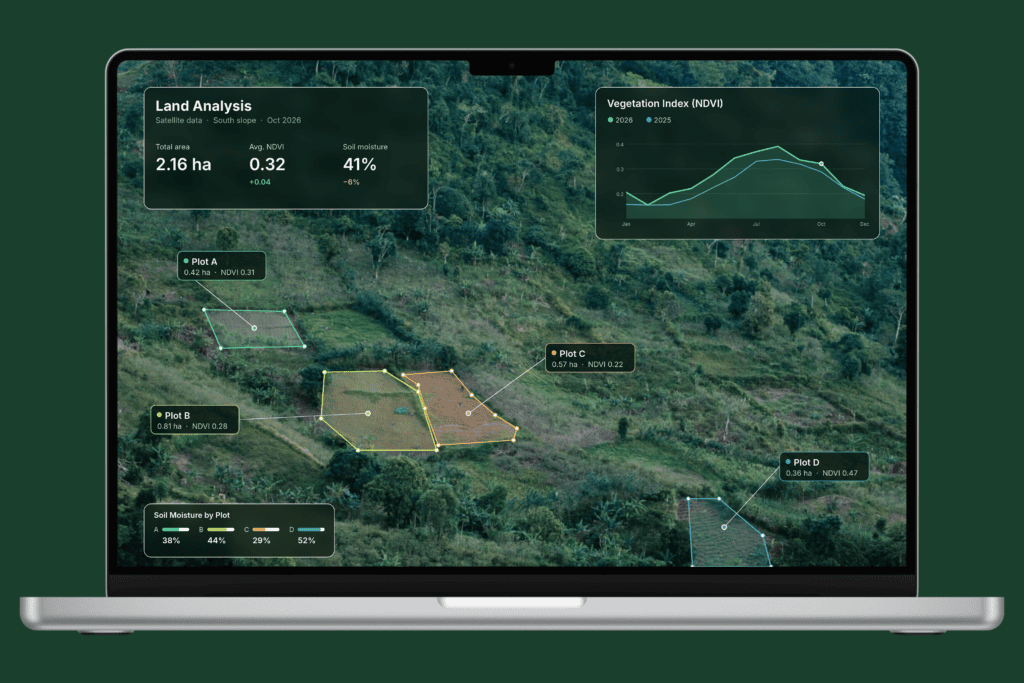
Spatial analysis

Overlaying plot geolocations with maps of protected areas helps verify compliance with restrictions on agricultural activities. Spatial analysis can also identify agricultural activities on land exceeding permitted slope thresholds, for example, to prevent erosion

4

Capacity building and awareness raising

In cocoa production, risks include unauthorised pesticide use, application near waterways, inadequate protective equipment and improper container disposal. Training smallholder farmers on legal requirements for pesticide use and disposal can help mitigate these risks.

Tools for DPI, Legality and Traceability

Practical tools and resources, collected in one toolbox.

Projects and Activities

Our objective is to support partner countries and businesses in building practical, transparent and risk-based legality systems that facilitate compliance with the EUDR while strengthening national governance.

Our work focuses on supporting:

Our legality work is implemented through country partnerships across Africa, Asia and Latin America.

Loading map...

The positions of the southern and northern hemisphere are changed on this map to encourage a change in perspectives and to counteract potential biases in world views.

Publications

These are our latest Legality publications. To narrow down your search, use the Library’s search and filtering functions by selecting the “legality” tag and adding a specific keyword.

This report assesses how evidence is produced, brokered, and used (or not used) in Kenya’s coffee policymaking ecosystem, using the Evidence-Informed Policymaking (EIPM) framework. It argues that the Green Supplement…

The guidance supports coffee companies in preparing for the EU Deforestation Regulation (EUDR), which applies from 30 December 2026, and from 30 June 2027 for micro and small undertakings. The…

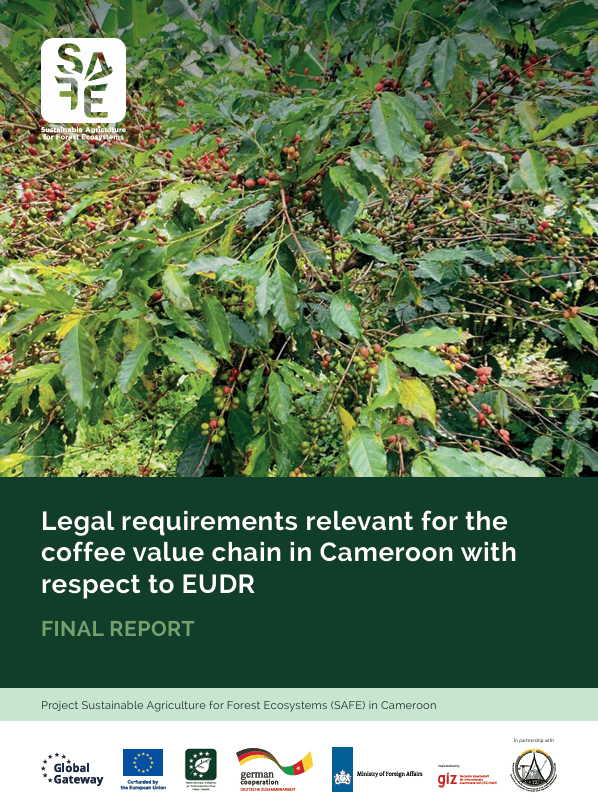
As the EU Deforestation Regulation reshapes coffee trade, how can Cameroonian coffee demonstrate that it is not only deforestation-free, but also legally produced? This publication offers answers. Drawing on legal…

The EU Deforestation Regulation (EUDR) brings renewed attention to the legal requirements governing coffee production and trade in Cameroon. This study provides a comprehensive overview of the national legal and…

As new regulations emerge to address deforestation and unsustainable land use, their interaction with existing national frameworks remains uncertain. This study examines the (in)coherence between the European Union Regulation on…

Achieving sustainable land-use governance in tropical commodity-producing countries requires coherent policy frameworks capable of balancing agricultural production, forest conservation, climate mitigation, and rural development. In Brazil, the implementation of the…

This brief examines Ethiopia’s preparedness for the European Union Deforestation Regulation (EUDR), highlighting significant gaps in farmers’ awareness and capacity to meet its requirements. While voluntary sustainability certification improves awareness,…

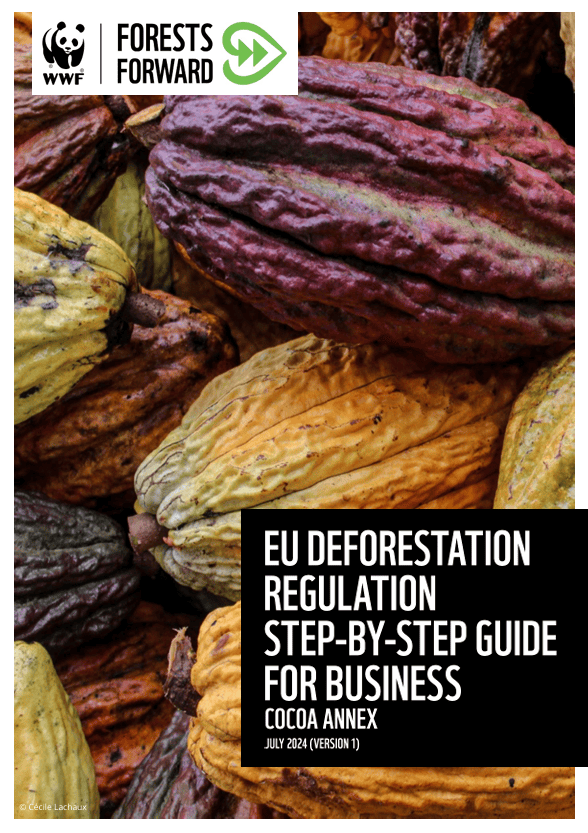
This document is a supplement to WWF’s commodity-generic EU Deforestation Regulation (EUDR) Step-by-Step Guide for Business. It provides guidance for companies wishing to comply with requirements related to cocoa products…

Partner organisations

Strengthening Interoperability Through Partnerships and Alignment

Building effective Digital Public Infrastructure requires collaboration across governments, international organizations, technology providers, civil society, and the private sector. Explore how our partners work together to develop shared standards, promote interoperability, and coordinate open-source digital solutions.

Region:

Luwero, Nakaseke, Kassanda, Mubende, Bukomansimbi, Kyotera, Omoro, and Nwoya

Target group:

Smallholder farmers, traders, state and non state actors, and processors

Key activities:
  • Capacity building of smallholder coffee farmers in production practices and sustainable land use management.
  • Establishing traceability system and facilitating access to sustainable financing 
  • Facilitate inclusive business partnerships between producer organizations and supply chain actors​ 
  • Promote multi-stakeholder cooperation​ 
Commodities:
Region:

Huánuco, Ucayali, Pasco and Junín

Target group:

Public and private stakeholders, especially exporting companies, cooperatives and smallholder producers

Key activities:
  • Strengthen the supply chains to meet EUDR requirements 
  • Facilitate access to sustainable finance and knowledge exchange
  • Training of smallholders to sustainable manage their production systems 
Commodities:
Region:

Ngozi and Kayanza 

Target group:

Smallholders

Key activities:
  • Training on the use of traceability tools and support on collection of geolocation data for EUDR compliance 
  • Support the development of a national coffee sector dashboard for traceability and transparency
  • Capacity building of smallholder coffee farmers in production practices and sustainable land use management.​ 
Commodities:
Region:

Centre, South West, Littoral, South, East and West regions

Target group:

Smallholder farmers, women, youth, and indigenous peoples

Key activities:
  • Develop inclusive business partnerships with the private sector 
  • Facilitate access to finance for sustainable business models 
  • Support and train farmers in open-source traceability systems 
  • Promote multistakeholder dialogues to improve legal and regulatory provisions 
Commodities:
Region:

(Lower) Kafue Catchment Ecosystem

Target group:

Farmers and community forest management groups

Key activities:
  • Support community forest management groups in the
    sustainable management of natural resources and livelihood creation
  • Support farmers to produce soy in line with the EUDR and increase productivity, and implement transparency and traceability pilots
Commodities:
Region:

Lampung, West Kalimantan, and Central Sulawesi

Target group:

Smallholder farmers, private sector, and civil society organizations along the value chains

Key activities:
  • Empowering Smallholder Farmers and Farmer Organizations by facilitating traceability and legality, building capacity on Good Agriculture Practices (GAP), and strengthening farmer organizations, ensuring inclusive support for both men and women farmers.
  • Promoting sustainable practices and collaboration by supporting village HCV/HCS conservation efforts, testing and strengthening the National Dashboard for traceability and legality, and fostering national and regional exchanges.
Commodities:
Region:

Son La, Gia Lai ​​

Target group:

Smallholder farmers and marginalized groups

Key activities:
  • Support coffee value chain actors
  • Foster deforestation-free, sustainable, and legal supply chains
Commodities:
Region:

Yangambi Biosphere Reserve, Salonga National Park North, Salonga National Park South, Virunga National Park, Kahuzi-Biéga National Park​

Target group:

Public and private sector

Key activities:
  • Promote sustainable agricultural practices
  • Minimize forest degradation
  • Prevent deforestation
Commodities:
Region:

Provinces of Orellana and Sucumbíos

Target group:

Smallholder farmers, women, indigenous people and youth

Key activities:
  • Promoting Multi Stakeholder Dialogues
  • Improving traceabilty systems
Commodities:

Implementation ended July 2026

Region:

Xingu territory, State of Pará

Target group:

Family farmers

Key activities:
  • Improve market access, value creation, and access to sustainable finance
  • Integrate farmers into traceability systems
Commodities:
Global activities