Community of Practice explores legality due diligence under the EUDR during third Core Group session

On 29 June 2026, members of the EUDR Community of Practice (CoP) Core Group met in Barcelona to examine how legality due diligence under the EU Deforestation Regulation (EUDR) can be approached in operational contexts. Co-facilitated by the EU Sustainable Supply Chain Coalition and the European Forest Institute (EFI), the session brought together Core Group members from across EUDR supply chains, NGOs and EU Competent Authorities. 

The meeting focused on legality due diligence, one of the key areas of EUDR implementation. Through a combination of technical discussions, practical exercises and peer exchange, participants explored how existing concepts and requirements may be interpreted across different operational settings. 

A deep dive into supply chains

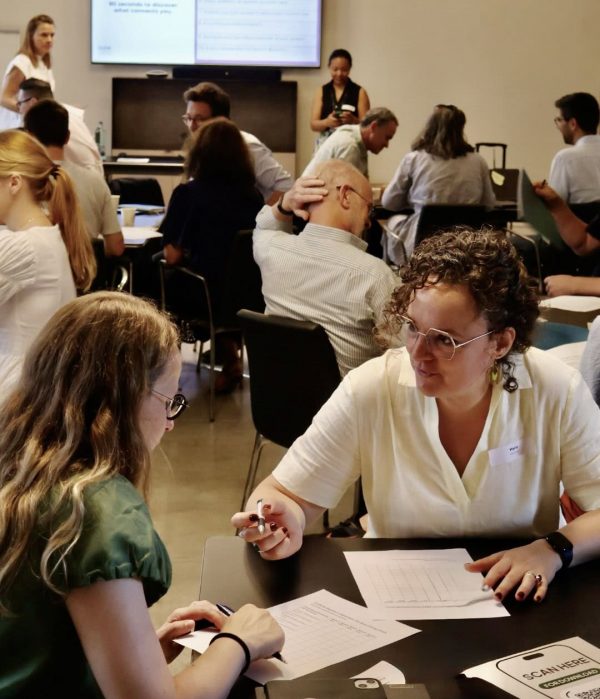
A central component of the session was the use of four complex case studies covering cocoa and coffee, palm oil and rubber, timber, and beef and soy supply chains. Working in groups, participants examined how legality-related risks may be identified, assessed and addressed, highlighting the diversity of contexts in which due diligence is applied and emerging best practices. 

The agenda also included a dedicated deep dive on substantiated concerns and “other relevant information”, with contributions from Fern, Earthsight and WWF. Discussions explored how such concerns may arise and what obligations different actors may have along the supply chain. 

Participants further identified additional supply chain scenarios that are not currently reflected in existing reference frameworks, contributing to a better understanding of complex actor roles and information flows within EUDR supply chains. 

The session also included mini dry runs focused on timber supply chains, covering EU and US sourcing contexts. These exercises explored how due diligence could be exercised by operators sourcing from smallholder-dominant, low-risk countries, while benefiting from firsthand feedback from Competent Authorities. 

Several cross-cutting observations emerged from the discussions: 

  • The interpretation of legality remains context-dependent. 
  • Supply chain structures introduce variability in how due diligence may be applied. 
  • Continued exchange is needed to support shared understanding and identify emerging best practices.
© European Forest Institute

The insights generated during the session will now be fed back into the wider Community of Practice to support collaborative learning and ongoing technical exchange among stakeholders involved in EUDR implementation.

More information

Region:

Luwero, Nakaseke, Kassanda, Mubende, Bukomansimbi, Kyotera, Omoro, and Nwoya

Target group:

Smallholder farmers, traders, state and non state actors, and processors

Key activities:
  • Capacity building of smallholder coffee farmers in production practices and sustainable land use management.
  • Establishing traceability system and facilitating access to sustainable financing 
  • Facilitate inclusive business partnerships between producer organizations and supply chain actors​ 
  • Promote multi-stakeholder cooperation​ 
Commodities:
Region:

Huánuco, Ucayali, Pasco and Junín

Target group:

Public and private stakeholders, especially exporting companies, cooperatives and smallholder producers

Key activities:
  • Strengthen the supply chains to meet EUDR requirements 
  • Facilitate access to sustainable finance and knowledge exchange
  • Training of smallholders to sustainable manage their production systems 
Commodities:
Region:

Ngozi and Kayanza 

Target group:

Smallholders

Key activities:
  • Training on the use of traceability tools and support on collection of geolocation data for EUDR compliance 
  • Support the development of a national coffee sector dashboard for traceability and transparency
  • Capacity building of smallholder coffee farmers in production practices and sustainable land use management.​ 
Commodities:
Region:

Centre, South West, Littoral, South, East and West regions

Target group:

Smallholder farmers, women, youth, and indigenous peoples

Key activities:
  • Develop inclusive business partnerships with the private sector 
  • Facilitate access to finance for sustainable business models 
  • Support and train farmers in open-source traceability systems 
  • Promote multistakeholder dialogues to improve legal and regulatory provisions 
Commodities:
Region:

(Lower) Kafue Catchment Ecosystem

Target group:

Farmers and community forest management groups

Key activities:
  • Support community forest management groups in the
    sustainable management of natural resources and livelihood creation
  • Support farmers to produce soy in line with the EUDR and increase productivity, and implement transparency and traceability pilots
Commodities:
Region:

Lampung, West Kalimantan, and Central Sulawesi

Target group:

Smallholder farmers, private sector, and civil society organizations along the value chains

Key activities:
  • Empowering Smallholder Farmers and Farmer Organizations by facilitating traceability and legality, building capacity on Good Agriculture Practices (GAP), and strengthening farmer organizations, ensuring inclusive support for both men and women farmers.
  • Promoting sustainable practices and collaboration by supporting village HCV/HCS conservation efforts, testing and strengthening the National Dashboard for traceability and legality, and fostering national and regional exchanges.
Commodities:
Region:

Son La, Gia Lai ​​

Target group:

Smallholder farmers and marginalized groups

Key activities:
  • Support coffee value chain actors
  • Foster deforestation-free, sustainable, and legal supply chains
Commodities:
Region:

Yangambi Biosphere Reserve, Salonga National Park North, Salonga National Park South, Virunga National Park, Kahuzi-Biéga National Park​

Target group:

Public and private sector

Key activities:
  • Promote sustainable agricultural practices
  • Minimize forest degradation
  • Prevent deforestation
Commodities:
Region:

Provinces of Orellana and Sucumbíos

Target group:

Smallholder farmers, women, indigenous people and youth

Key activities:
  • Promoting Multi Stakeholder Dialogues
  • Improving traceabilty systems
Commodities:
Region:

Xingu territory, State of Pará

Target group:

Family farmers

Key activities:
  • Improve market access, value creation, and access to sustainable finance
  • Integrate farmers into traceability systems
Commodities:
Global activities