

A turning point for regional cooperation in Latin America
On May 28 and 29, 2026, a technical and articulation dialogue on deforestation-free value chains was held in the city of Tena (Ecuadorian Amazon). The Regional Exchange of Flagships of the Team Europe Initiative (TEI) was not merely a descriptive presentation of progress, but a strategic space for inter-institutional alignment. It focused on defining the sustainability of results and the handover of tools ahead of the closure, in 2026, of flagship initiatives such as SAFE Ecuador and AL-INVEST Verde.
Under the premise that generic solutions do not exist, the meeting established a clear guiding principle: the key to success lies in adapting technical and due diligence tools to the organizational and territorial architecture already existing in each partner country. Thus, preparation for the EU Deforestation Regulation (EUDR) is approached not as a regulatory imposition, but as a driver for productive transformation, social inclusion, and sustainable commercial competitiveness.
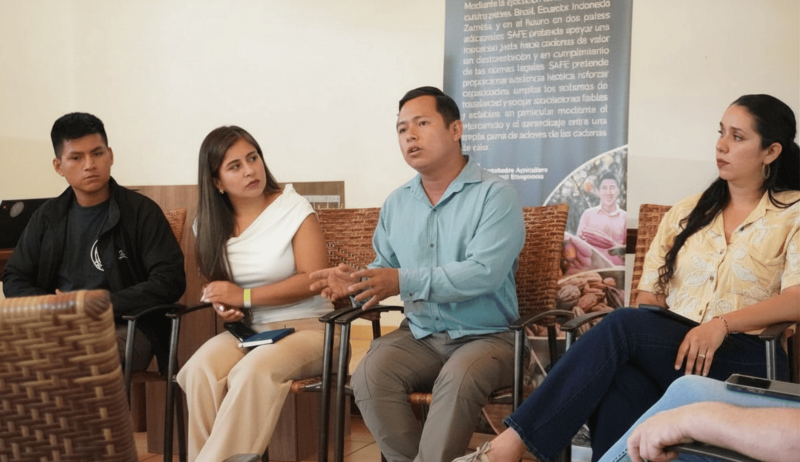
European synergy: connecting efforts beyond individual projects
The Team Europe approach seeks to overcome the historical fragmentation of cooperation projects by articulating resources and methodologies from Member States and the European Commission into a single shared vision. During the event, it was highlighted how horizontal coordination among implementing agencies, government sectors, producer associations, and grassroots organizations optimizes investments and prevents duplication of efforts on the ground.
There are many partners who already work very well together, and I believe the Delegation's role has been important in connecting different actors and implementing organizations. Within the regional framework, we are beginning this process of exchanging good practices to see what works and what we can do together.
Simon Gmeiner, Policy Officer at the European Commission Directorate-General for International Partnerships
The five pillars for the EUDR response
The exchange was structured around five fundamental pillars aimed at addressing readiness for the implementation of the EU Deforestation Regulation (EUDR): institutional coordination, traceability, legal frameworks, inclusion of smallholders, and private sector engagement.
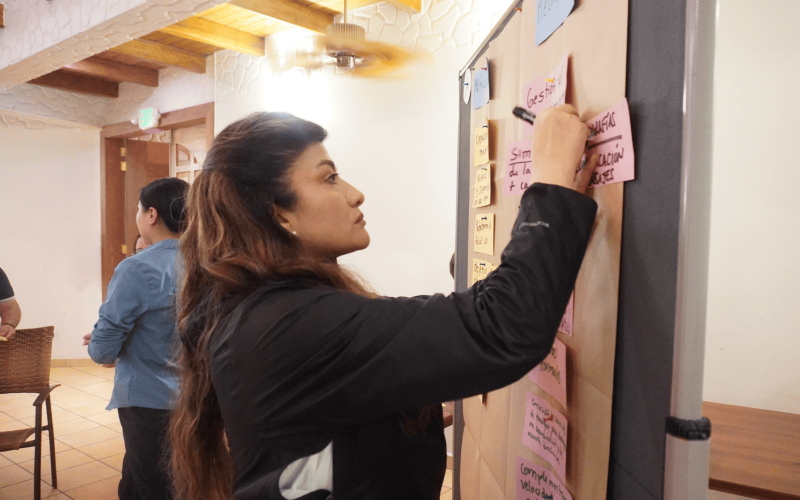
From theory to territory: training and amazonian solutions
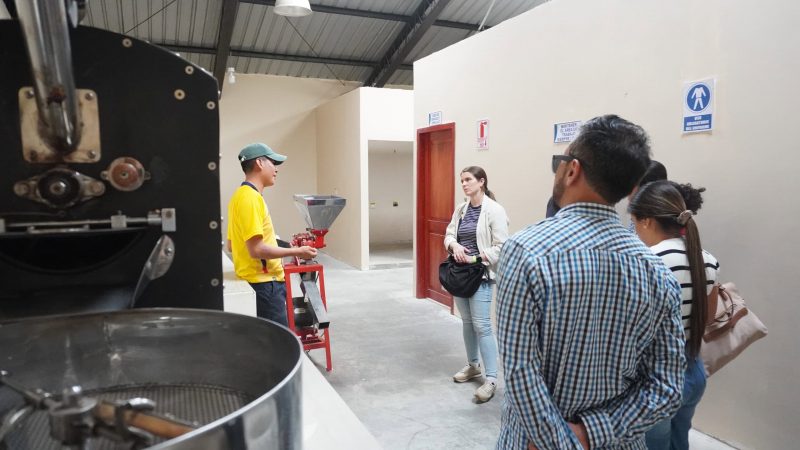
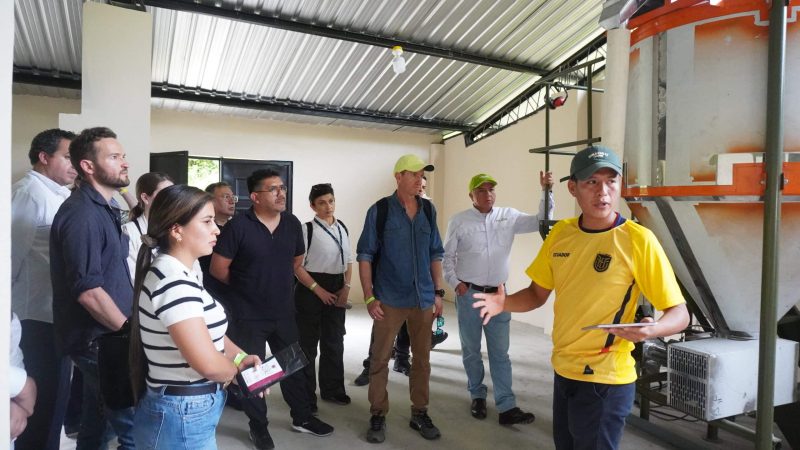
Field discussions in Tena highlighted the critical challenges facing the region. One of the most relevant findings addressed was that nearly 90% of cocoa producers in Ecuador operate unorganized. This creates a high risk of market exclusion under EUDR requirements unless producer organizations, cooperatives, or partnerships with responsible commercial intermediaries are established.
To address this gap, the event highlighted the success of the “Train the Trainer” approach, which translates complex regulatory concepts into accessible language for field technicians and local communities. Furthermore, the experience of the Sello Chakra (Chakra Seal) in the Ecuadorian Amazon established itself as a flagship model of territorial management. This ancestral agroforestry system not only ensures forest conservation and biodiversity, but also legally and environmentally validates cocoa production against European market requirements.
The main synergy I see is the ability to be much more effective on the ground through train-the-trainer programs. There is a vast array of tools that can be made interoperable so that efforts on the ground are not lost, but rather connected directly with the European operator.
Patricia Rengifo, International Trade Centre (ITC Ecuador)
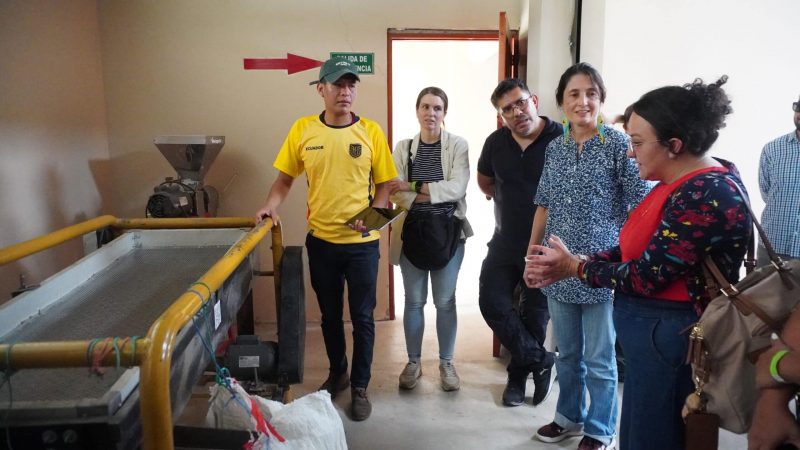
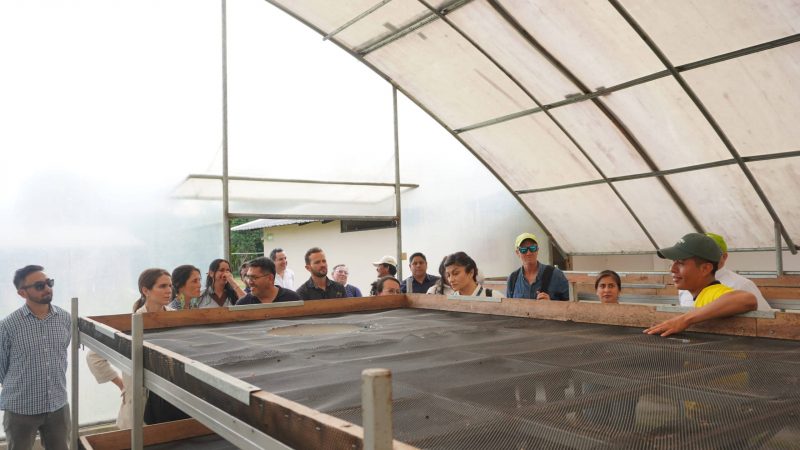
Financial Innovation, Artificial Intelligence, and Digital Interoperability
The technical dialogue underscored the urgent need to transition from models dependent on temporary subsidies toward sustainable market-based financial mechanisms. Proposals included promoting instruments such as green credit lines, parafiscal funds, and payment for ecosystem services (PES) schemes, as well as facilitating access to carbon markets that directly reward producers for standing forest conservation. Additionally, the piloting of Artificial Intelligence tools (chatbots) was announced to provide immediate, personalized technical assistance to smallholders, drastically reducing the operational costs of rural extension services.
On the technological front, the initiative reaffirmed its commitment to packaging all digital solutions under Open-Source licenses. Platforms such as SYLVA (developed by ITC) aim to demonstrate how geolocation, legal self-assessment, and traceability management can be articulated while ensuring interoperability with national government systems (such as the GUIA System and ministerial geo-viewers) and private sector platforms.
Towards a Regional Roadmap: Ensuring Sustainability and Legacy
The closing of the event focused on proposing a Regional Strategic Roadmap for the formal delivery of outputs. Projects concluding in 2026 are transferring their toolkits, practical implementation guides, and methodologies to ongoing programs, such as the regional IKI EUDR project (led by IUCN South America).
It is important to recognize that a significant amount of work has already been developed, particularly regarding training tools and dry-runs. These can be directly utilized and adapted for continuity in new projects to ensure trade remains robust, direct, and fully compliant with regulations.
Cristina Rosero, La Unión Internacional para la Conservación de la Naturaleza South America (IKI EUDR Project)
As a concrete step toward ensuring sustained inter-institutional dialogue, participants agreed to consolidate the Regional Community of Practice for Latin America. The REDD+ Landscape III project, alongside the PROMECAFÉ program, has been facilitating an exchange platform for Central America, which was recently expanded to Latin America through links with the Team Europe Initiative on Deforestation-free Value Chains. This permanent platform, meeting bi-monthly, will maintain active peer-to-peer exchange and transform European market regulatory requirements into a lasting legacy of resilience, equity, and sustainability for the region.


