Drawing on a survey of 333 smallholder farmers and farmers´ organizations across 16 countries in Africa, Asia, and Latin America, as well as a review of existing literature, this paper…
The Gender Equality and Social Inclusion (GESI) Sprint is a collaborative, friendly-competitive initiative for development agencies, companies, NGOs, and governments to embed gender equality and social inclusion. Originating in the…
The EU Deforestation Regulation (EUDR) requires operators placing coffee and derived products on the EU market to ensure that products are deforestation-free, legally produced, and covered by the required due diligence process….
The EU Deforestation Regulation (EUDR) requires operators placing palm oil and derived products on the EU market to ensure that products are deforestation-free, legally produced, and covered by the required…
The EU Deforestation Regulation (EUDR) requires operators placing cacao and derived products on the EU market to ensure that products are deforestation-free, legally produced, and covered by the required due diligence process….
The EU Deforestation Regulation (EUDR) requires operators placing cacao and derived products on the EU market to ensure that products are deforestation-free, legally produced, and covered by the required due diligence process….
The EU Deforestation Regulation (EUDR) requires operators placing coffee and derived products on the EU market to ensure that products are deforestation-free, legally produced, and covered by the required due…
The EU Deforestation Regulation (EUDR) requires operators placing palm oil and derived products on the EU market to ensure that products are deforestation-free, legally produced, and covered by the required…
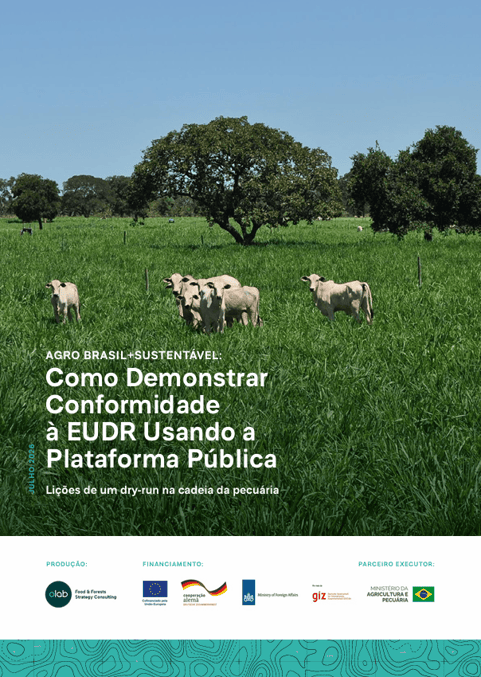
This report was prepared with the primary objective of testing the application of the Agro Brasil+Sustentável (AB+S) Platform in ensuring compliance with the European Union Deforestation Regulation (EUDR), considering both…
Este guia busca apoiar produtores, cooperativas e empresas na realização dos procedimentos necessários para identificar e reduzir riscos relacionados às exigências de exportação para a União Europeia, com base no…
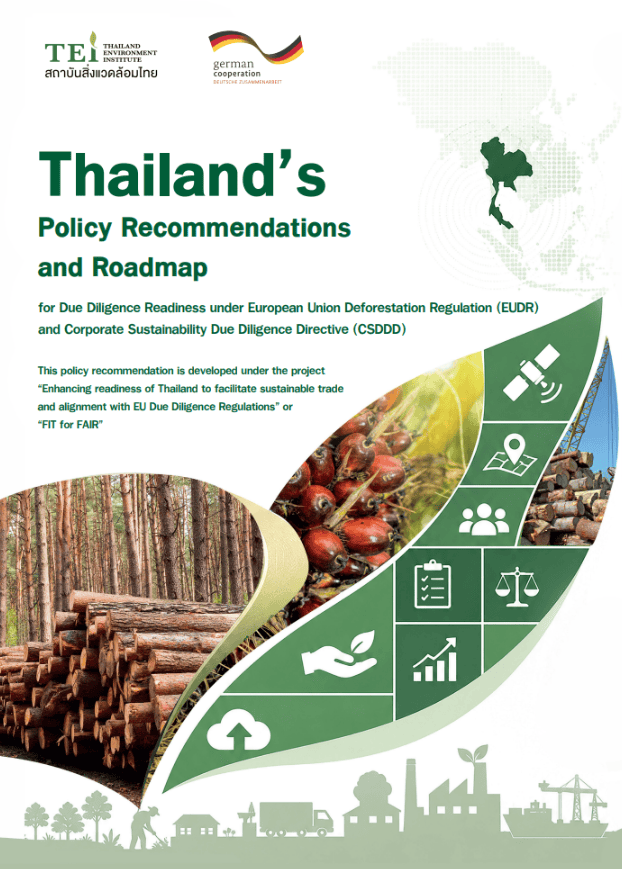
Developed as part of the FIT for FAIR project, the report provides policy recommendations and a national roadmap to support the preparation of Thailand’s supply chains for evolving due diligence…
Practical Guide to Design and Implement a “Responsible Sourcing Policy” and “Code of Conduct”. This practical guideline helps organisations design and implement a Responsible Sourcing Policy and Supplier Code of Conduct. Tailored…
Practical Guide for Supply‑Chain Risk Mapping, Categorization and Prevention/Mitigation. This guide provides a structured approach to analyze and mitigate risks in supply chains. It focuses on six areas: (1) availability…
Procedure for Evaluating Assurance or Certification Systems within Due Diligence. This procedure explains how to assess whether second‑ or third‑party certification/verification systems cover requirements relevant to EUDR/CSDDD and an organization’s Responsible…
Practical Guide for Gathering Information and Mapping Supply Chains. This guide details how to map supply chains from your organization upstream to origin and collect robust information for due diligence….
Practical Guide for Implementing Due Diligence and Alignment with the EUDR and CSDDD This entry guide in the FIT for FAIR toolkit explains how to implement due diligence systems that comply…
Increasing due diligence requirements are shaping how producing countries prepare agricultural value chains for access to European markets. This report synthesises cross-country experiences and lessons from the FIT for FAIR…
This study provides an empirical assessment of Ethiopian smallholder coffee farmers’ preparedness for the European Union Deforestation Regulation (EUDR), examining awareness, compliance capacity, and potential impacts, with particular attention to…
In response to public pressure, companies have increasingly adopted voluntary sustainable sourcing commitments. Yet, it often remains unclear whether such commitments lead only to the narrow goal of supplier compliance,…
Ecossistema da Bacia Hidrográfica do Kafue (Inferior)
Público-alvo:
Agricultores e grupos de gestão florestal comunitária
Principais atividades:
Apoiar grupos de gestão florestal comunitária na gestão sustentável dos recursos naturais e criação de meios de subsistência
Apoiar os agricultores na produção de soja em conformidade com a EUDR e aumentar a produtividade, e implementar projetos-piloto de transparência e rastreabilidade
Pequenos agricultores, sector privado e organizações da sociedade civil ao longo das cadeias de valor
Principais atividades:
Capacitar os pequenos agricultores e as organizações de agricultores facilitando a rastreabilidade e a legalidade, desenvolvendo a capacidade em Boas Práticas Agrícolas (BPA) e fortalecendo as organizações de agricultores, garantindo o apoio inclusivo para os agricultores homens e mulheres.
Promover práticas sustentáveis e colaboração através do apoio aos esforços de conservação de HCV/HCS nas aldeias, testando e fortalecendo o Painel Nacional para a rastreabilidade e legalidade, e fomentando intercâmbios nacionais e regionais.