Solidaridad Colombia, supported by TRACECOL (a technical assistance program funded by the European Union), conducted a survey of 120 organizations (47 cocoa, 44 coffee, and 29 palm oil) to measure…
This document is a supplement to WWF’s commodity-generic EU Deforestation Regulation (EUDR) Step-by-Step Guide for Business. It provides guidance for companies wishing to comply with requirements related to cocoa products…
En el marco del programa AL-INVEST Verde, y en colaboración con el programa SAFE de la Cooperación Alemana-GIZ y con el apoyo técnico del Instituto Forestal Europeo (EFI), se organizaron…
Despite massive attention on Due Diligence regulations and many organisations publishing policy position papers, there is a lack of operational guidance on what exactly cocoa supply chain companies will need…
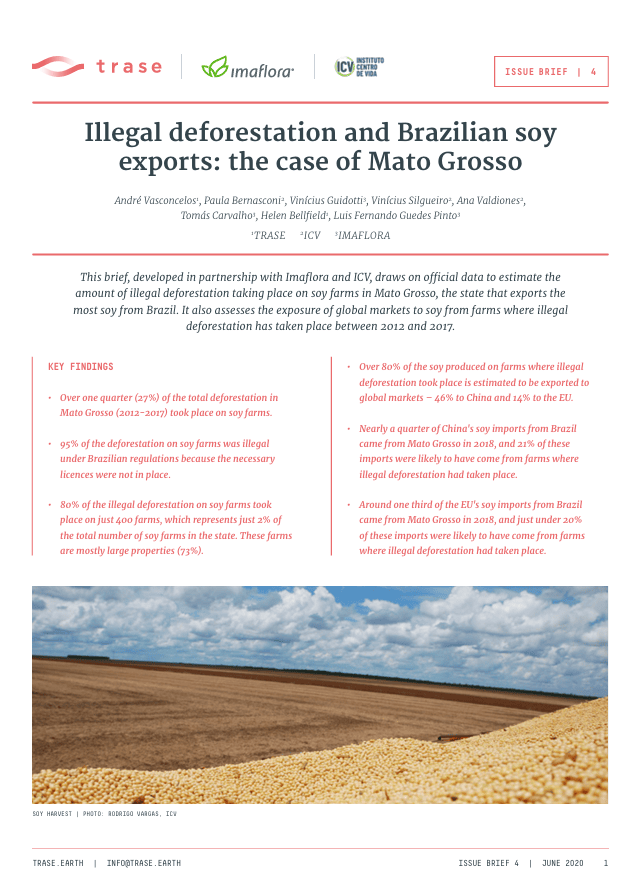
This brief, developed in partnership with Imaflora and ICV, draws on official data to estimate the amount of illegal deforestation taking place on soy farms in Mato Grosso, the state…
This report examines geolocation data collection tools used across Indonesia’s palm oil supply chains, based on a survey of 11 organisations under the ATLAS project. It reviews existing tools, their…
This study assesses the level of compliance of soy production in the Amazon and Cerrado biomes with key elements of the Forest Code, based on the analysis of 27 million…
This briefing is part of a series assessing environmental non-compliance risks in Brazil’s beef and soy producing landscapes, developed through a new part nership between Trase, ICV, Federal University of…
This briefing provides an explanation of the scope of the ’legality requirement‘ in the EU Deforestation Regulation (EUDR). It identifies common challenges which, though not insurmountable, should be taken into…
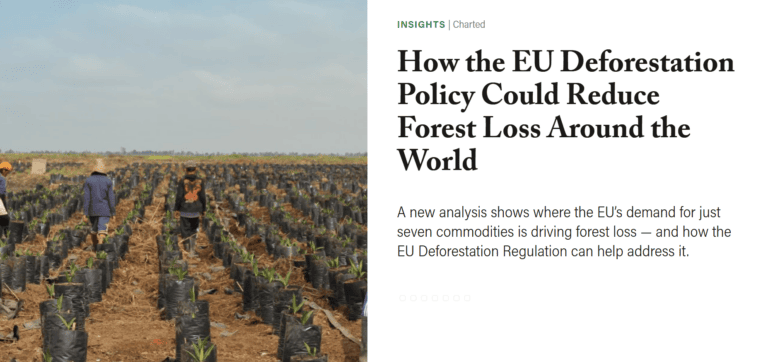
To understand where the EU’s deforestation exposure is concentrated — and where EUDR implementation could have the greatest reach — WRI analyzed Trase data on EU-linked commodity supply chains. The…
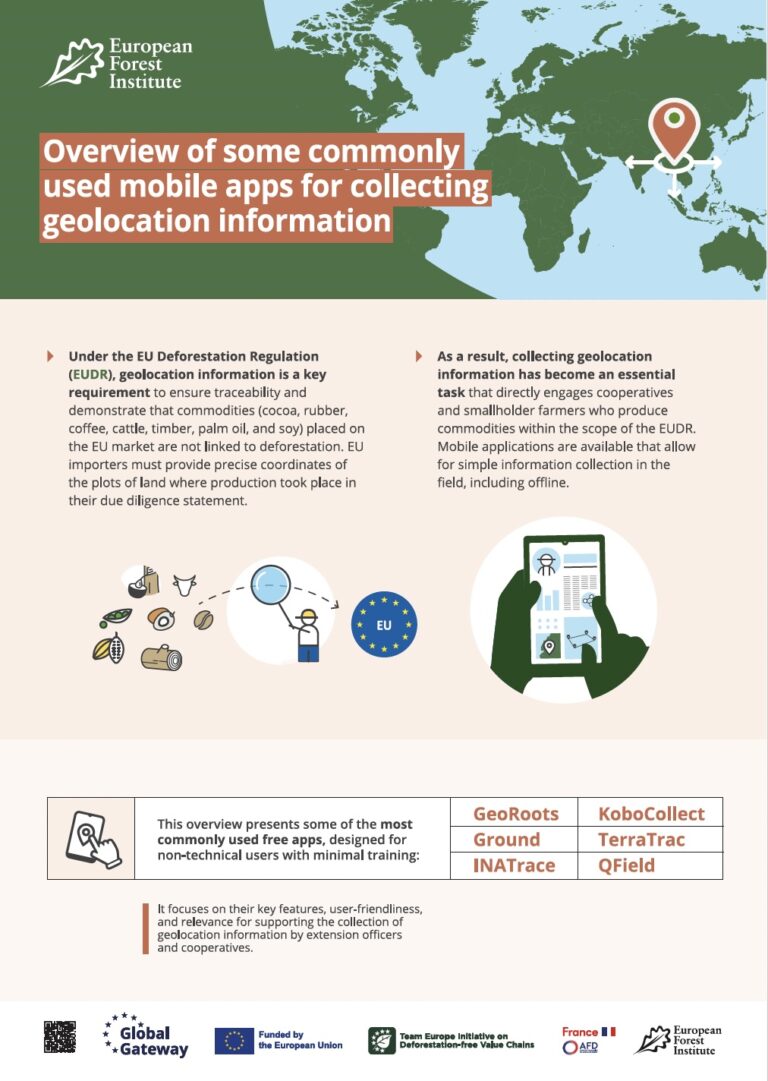
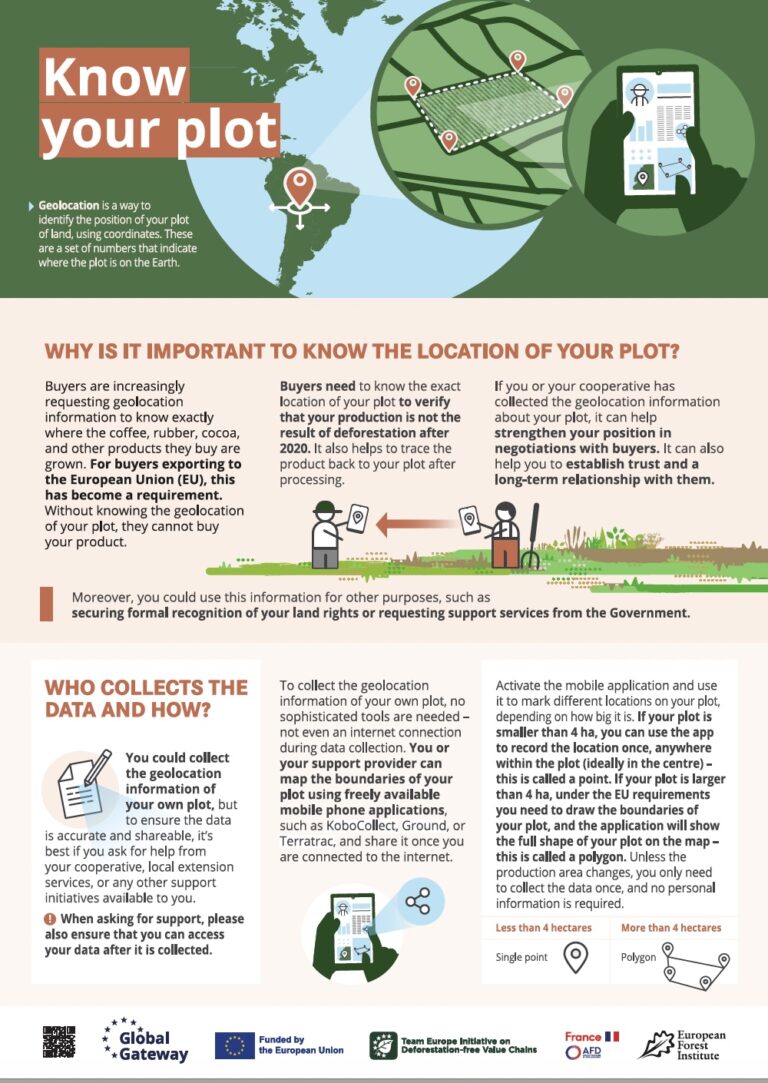
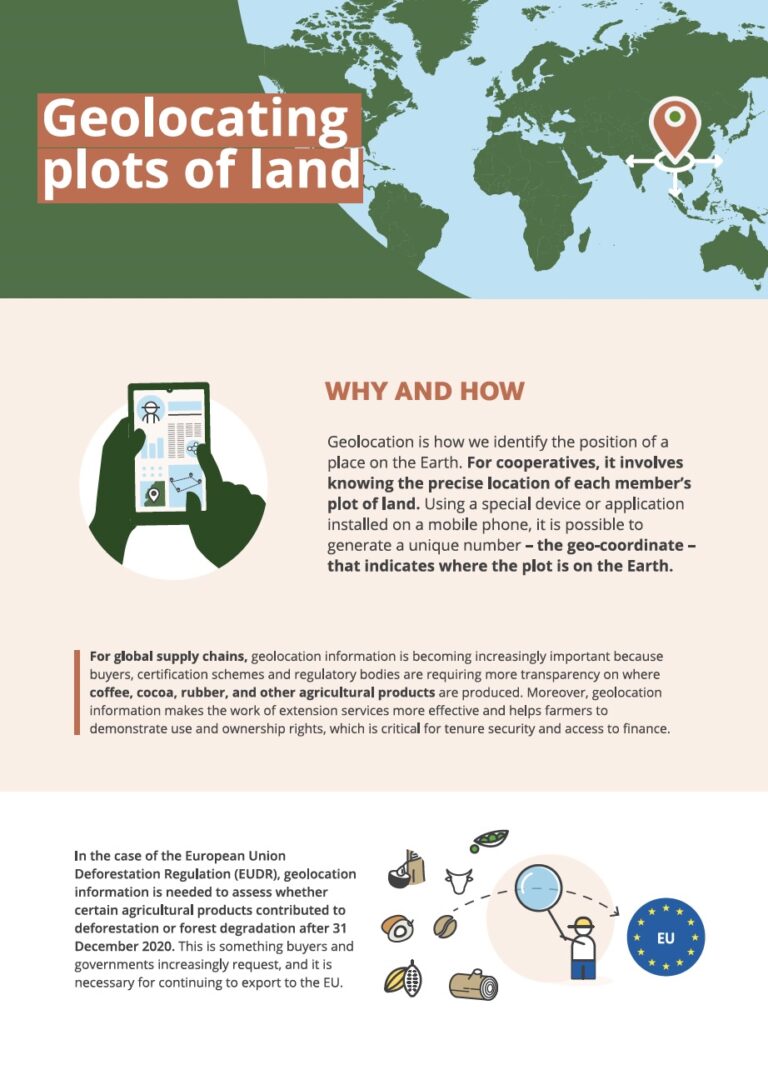
Geolocation data is key to supporting traceability in agricultural supply chains. Under the EU Deforestation Regulation (EUDR), for example, geolocation information for all plots of land where a relevant commodity…
To ensure that smallholder farmers are included in global supply chains for agricultural products like coffee, cocoa, rubber, palm oil and others, it is important to have the precise geolocation…
Knowing the precise location of the plots of land where an agricultural commodity was produced is becoming increasingly important for global supply chains amid a growing focus on traceability. Regulations,…
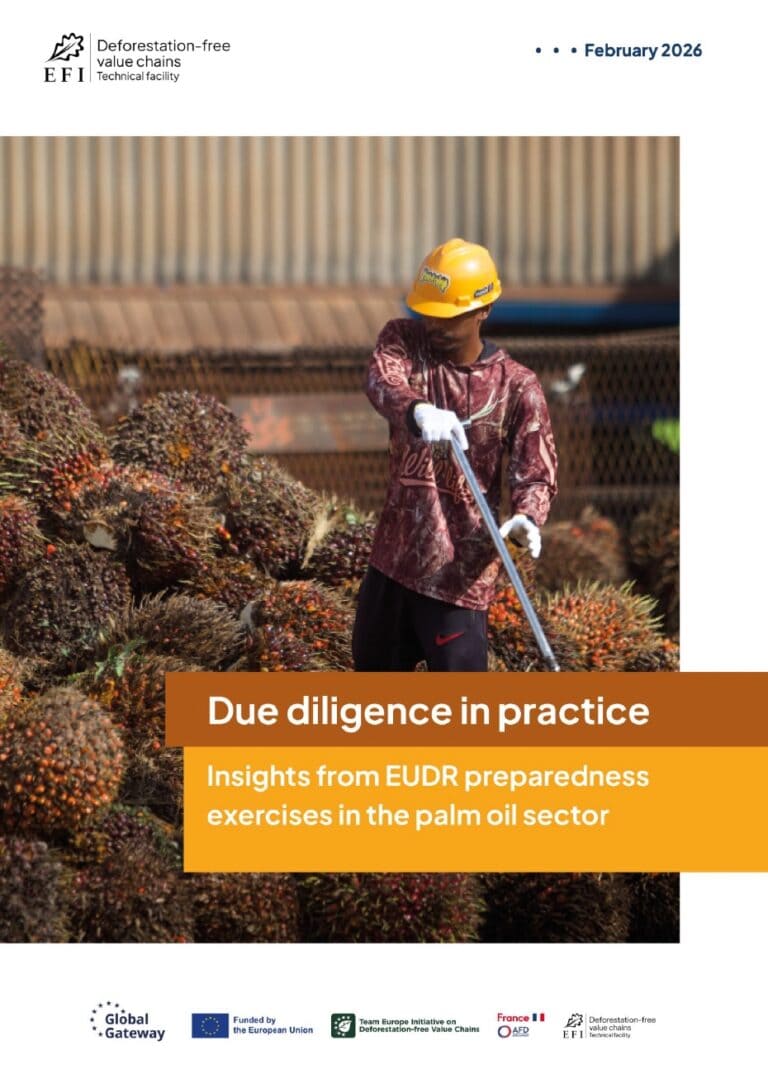
The report documents a process conducted in October 2025 as part of a learning exercise in the palm oil sector for operators and Competent Authorities. The EU Competent Authority of…
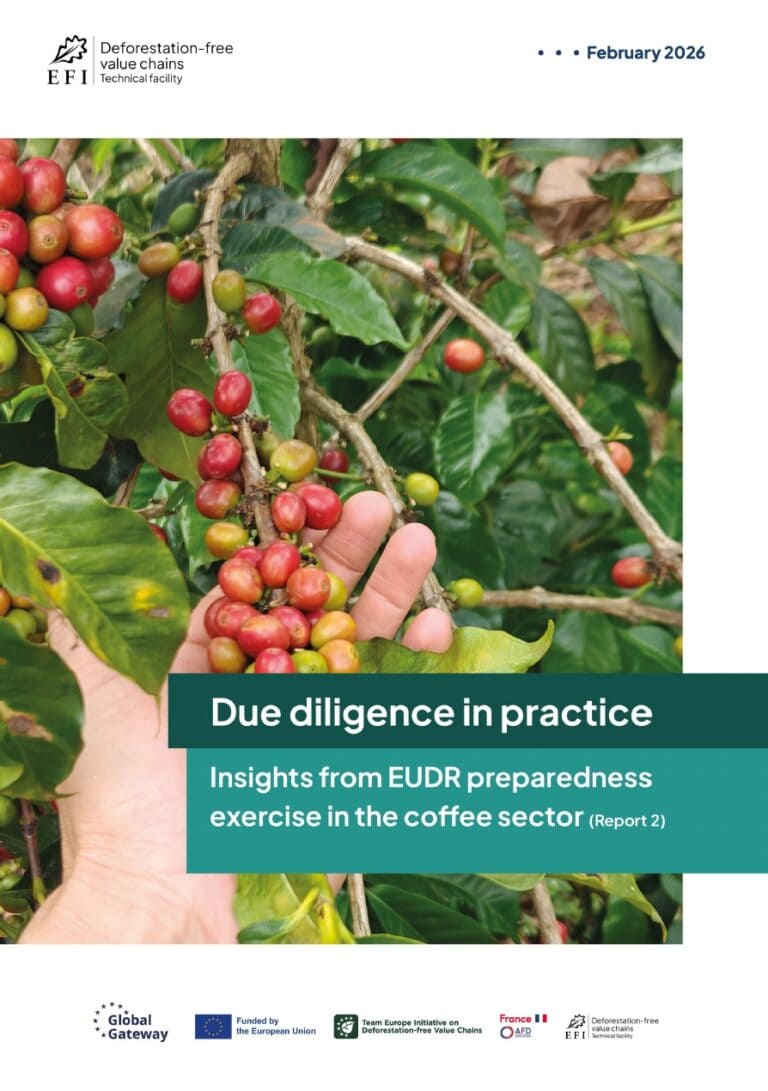
This report documents a process conducted in September 2025 as part of a learning exercise in the coffee sector for operators and Competent Authorities. The EU Competent Authorities of Germany…
This paper presents early evidence on how producer countries in Africa, Asia, and Latin America are responding to the EU Deforestation Regulation (EUDR) ahead of its application. Drawing on eight…
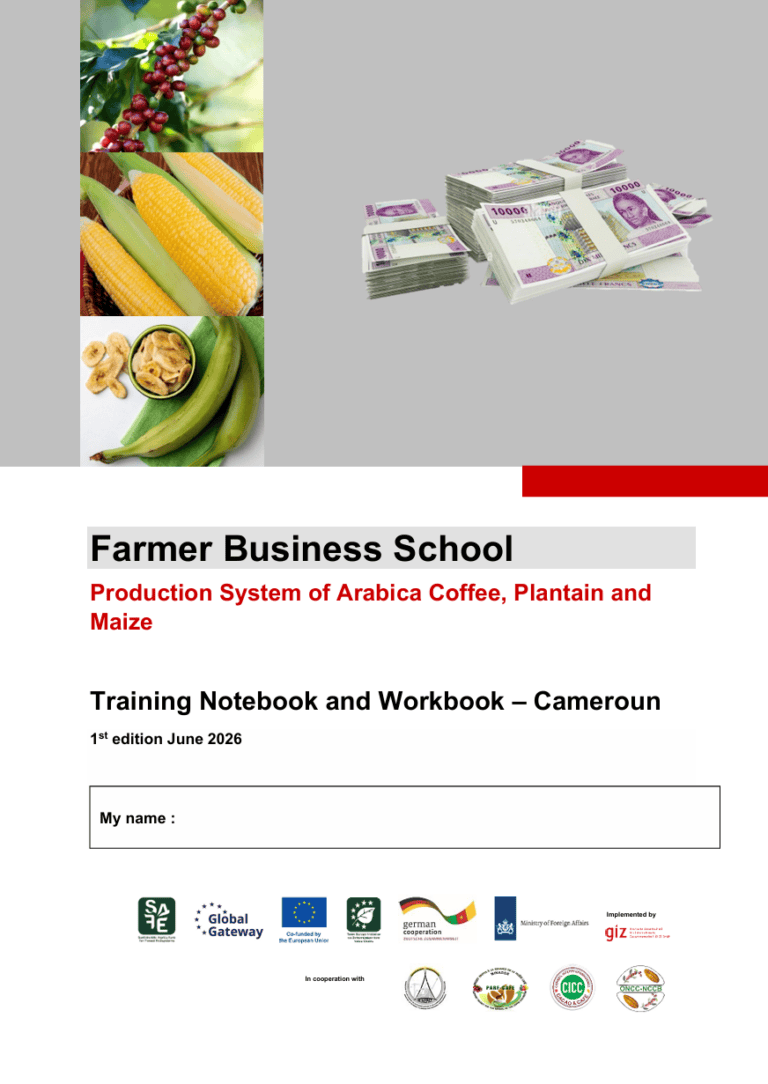
This training notebook and workbook provides a comprehensive guide to the Farmer Business School (FBS) approach tailored to the Arabica coffee production system in Cameroon. Designed for smallholder farmers and…
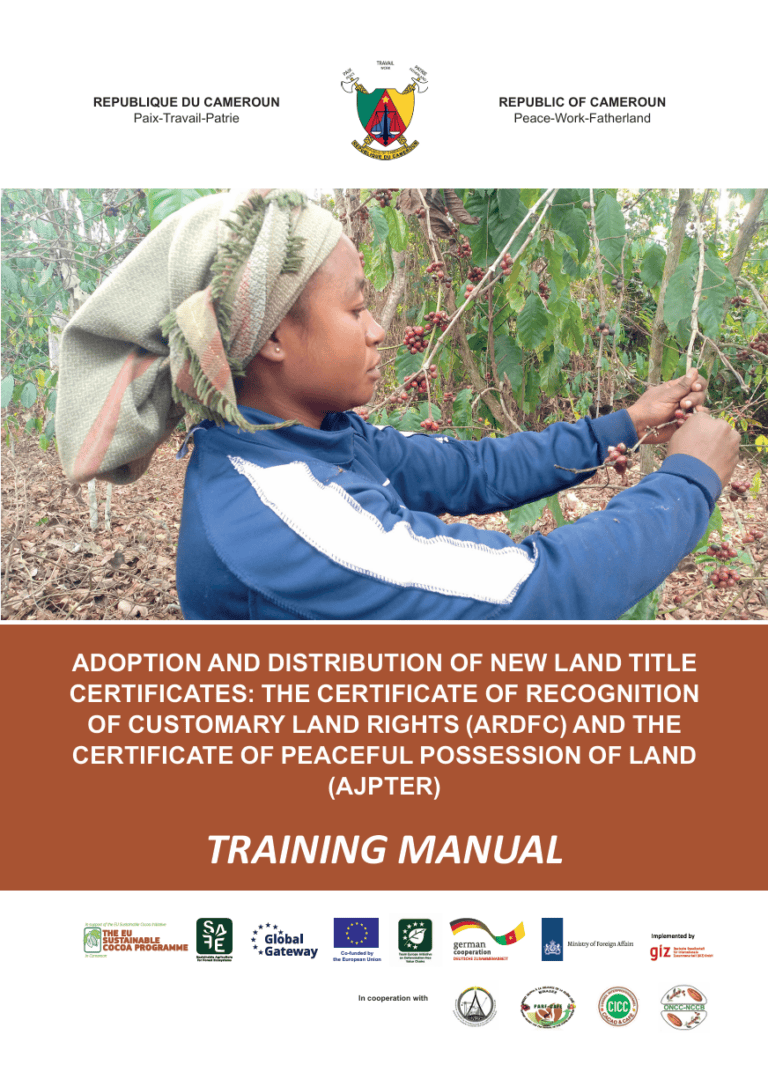
This training manual provides a practical guide to understanding and securing land rights in Cameroon, with a focus on the Certificate of Recognition of Customary Land Rights (ARDFC) and the…
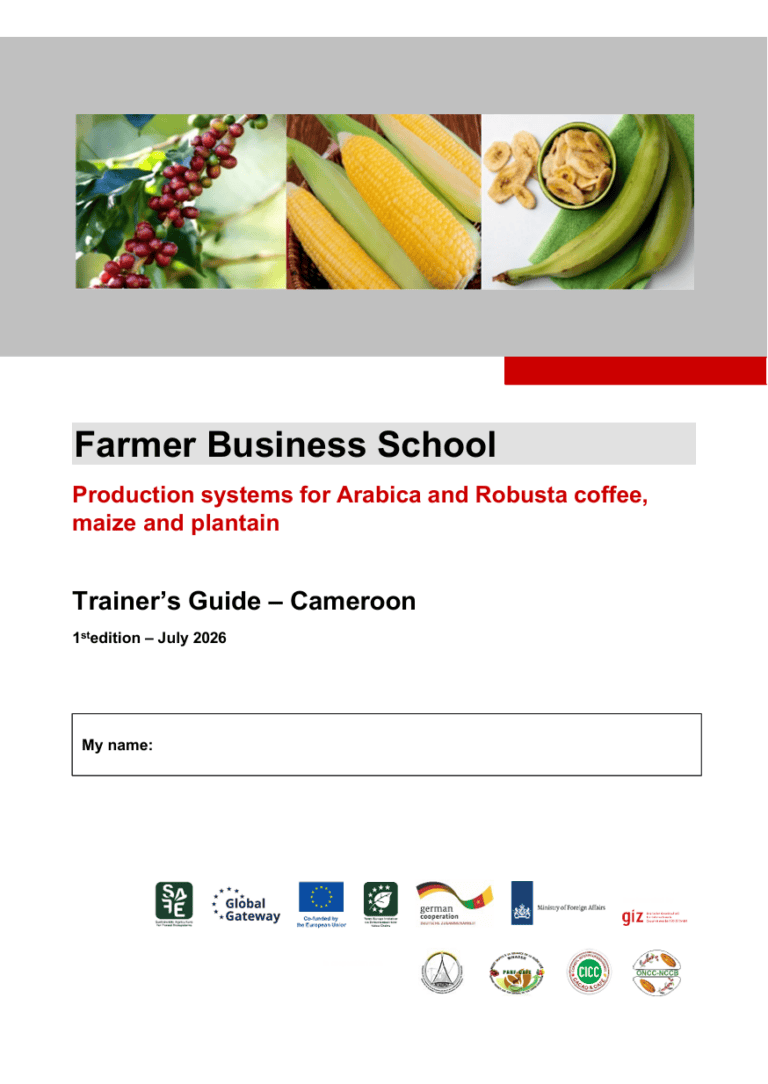
This Trainer’s Guide provides a practical framework for delivering the Farmer Business School (FBS) programme for Arabica and Robusta coffee production systems in Cameroon. It supports qualified trainers in delivering…
Agricultores y grupos de gestión forestal comunitaria
Actividades clave:
Apoyar a los grupos de gestión forestal comunitaria en la gestión sostenible de los recursos naturales y la creación de medios de vida.
Apoyar a los agricultores para que produzcan soja de acuerdo con el EUDR y aumenten la productividad, e implementar pilotos de transparencia y trazabilidad
Pequeños agricultores, sector privado y organizaciones de la sociedad civil a lo largo de las cadenas de valor
Actividades clave:
Empoderar a los pequeños agricultores y las organizaciones de agricultores facilitando la trazabilidad y la legalidad, desarrollando capacidades en buenas prácticas agrícolas (BPA) y fortaleciendo las organizaciones de agricultores, asegurando un apoyo inclusivo tanto para los hombres como para las mujeres agricultoras.
Promover prácticas sostenibles y colaboración apoyando los esfuerzos de conservación de HCV/HCS de las aldeas, probando y fortaleciendo el Tablero Nacional para la trazabilidad y legalidad, y fomentando intercambios nacionales y regionales.