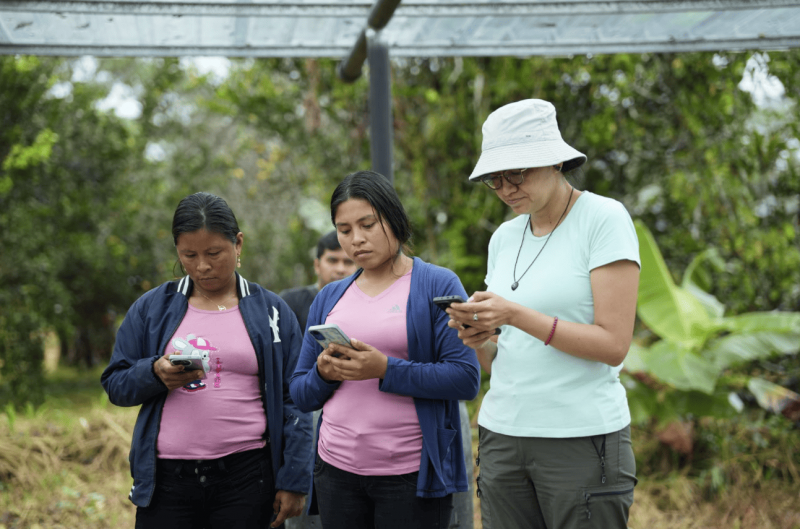
From the cocoa fields of Brazil to the coffee heartlands of Uganda’s coffee, from the rubber plantations in Indonesia to the hills of the Democratic Republic of Congo – one question remains the same: who gets to lead, make decisions and benefit in the agricultural sector? The GESI Sprint, an idea accelerator – shows how inclusion can be put in action: women are securing land rights and gaining market access. Youth are developing geospatial skills for deforestation-free value chains and indigenous voices are having a seat at the table. The common thread is clear: when practical skills, formal rights, and smart partnerships come together value chains become fairer and more resilient. Read and learn more about our activities around GESI across nine countries, some of them have already concluded activities, others are mid implementation.
This article will showcase the progress of activities in Ecuador, Brazil and Zambia, while also sharing a guide for projects that can use a similar approach.
About the GESI Sprint Approach
Together with the South Africa based consultancy Korumo and a transnational team, the SAFE country teams embarked on an 18-month journey to embed gender and social inclusion. Some learnings as well as stories of struggle were made along the way. A learning guide is soon to be shared to show how progress within deforestation-free value chains can be made.
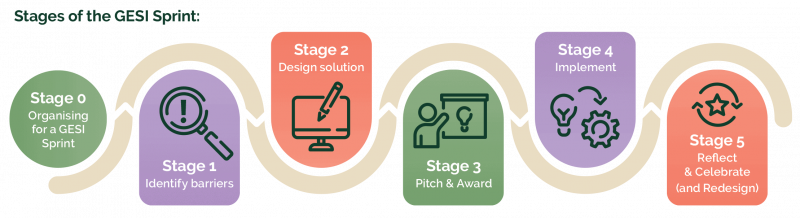
The Gender Equity and Social Inclusion (GESI) Sprint process enables to identify concrete, measurable actions regarding gender and intersectionality. The idea was to guide participating teams in working on a solution to remove a context-specific barrier to gender equity and social inclusion. Teams would pitch their solution – using set criteria – to obtain extra funding. They would be supported by external gender coaches in designing, implementing, and monitoring their intervention, and engage in peer learning through joint, cross-continental events.
From data to reality: GESI barriers found in the SAFE project
As the SAFE teams dug into their findings, the abstract concept of barriers took on human faces and real-world consequences. They saw patterns emerge across different contexts:
- No formal land ownership by women and Indigenous farmers who have been working the land for generations. Without land rights documentation they cannot access credit and insurance, nor advance themselves.
- Non-participation in traceability systems for EUDR compliance, leaves marginalized groups invisible and their sustainable practices unrewarded.
- Unsafe and unequal participation in marketplaces and cooperative meetings prevents indigenous women and other marginalized groups from representing themselves, remaining voiceless and their leadership stifled by culture or fear.
- Despite their crucial role, women and youth are absent from leadership in cooperatives and local governance, leaving decisions about their own futures in the hands of others.
Learnings from the three country teams
Ecuador
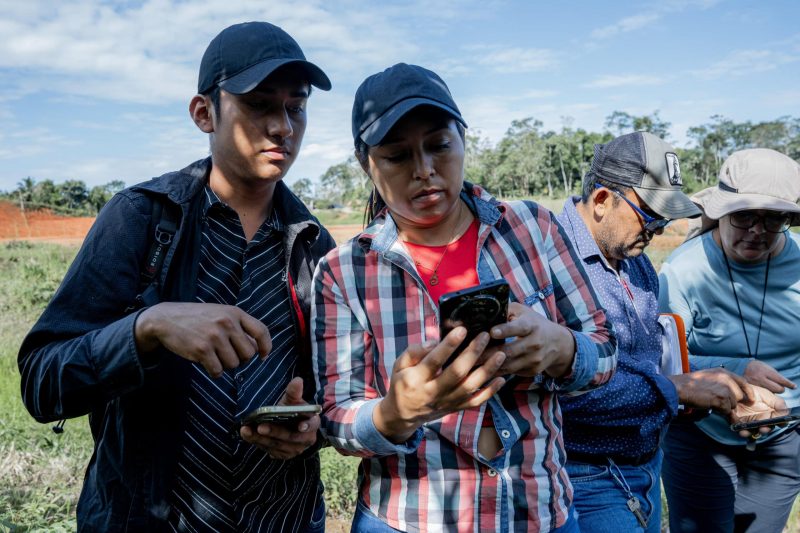
Women and young people in Ecuador’s Amazon region often have limited access to technical skills and income opportunities, reducing their participation in sustainable value chains and decision-making processes.
The GESI Sprint integrated gender and social inclusion into an ongoing project by providing practical, locally adapted training in geospatial mapping and EUDR-related skills. Local consultants ensured the activities reflected the regional context, while a strong focus on hands-on learning kept participants engaged. A total of 24 participants—most of them under the age of 40—strengthened their technical capacities, with many continuing to apply their new skills within their producer associations.
The Sprint demonstrated that practical, locally grounded training can quickly build confidence, leadership and participation, particularly among women and young people. It also highlighted that linking capacity building to income-generating opportunities is essential for creating lasting and inclusive economic impact.
Zambia
In many rural communities in Zambia, women cultivate land without having formally recognised rights to it. Under customary land tenure systems, this limits their economic opportunities, weakens their decision-making power, and makes it harder to participate in formal markets.
The Team in Zambia worked with local partner Medeem, an NGO, traditional chiefs and communities to strengthen women’s land rights. Through community dialogues, awareness campaigns and training workshops, traditional leaders were encouraged to allocate land to women and formalise ownership through Parcel Certificates. During the Sprint also a land rights manual was developed, carried out a GESI baseline study and promoted the approach at international level.
The Sprint laid the foundation for stronger women’s land rights and greater participation in agricultural value chains and formal markets. It also showed that changing social norms takes time. Lasting progress depends on sustained dialogue, trust-building and the continued engagement of women, men and traditional leaders.
Brazil
In Brazil, there is often a clear distance between institutions and producers. Most engagement happens through intermediaries rather than through direct contact with local actors. As a result, decision-makers may have only a limited understanding of local realities, while producers have fewer opportunities to influence the policies that affect their livelihoods.
The GESI Sprint brought cocoa and livestock producers, local leaders, institutions and government representatives together through workshops, field visits and follow-up coaching. Direct interaction during the conference helped reduce the gap between policy and practice. Practical tools helped participants identify realistic entry points for more inclusive action. Once people met, exchanged experiences and built relationships, cooperation became easier and more meaningful.
The Sprint strengthened relationships between national and local actors, supported emerging women leaders and created space for different generations to learn from each other. It showed that continued, direct dialogue between producers and decision-makers can improve understanding, build trust and create stronger foundations for more inclusive and effective policy implementation.
Conclusion
The GESI Sprint in Ecuador, Zambia and Brazil demonstrates that social inclusion becomes tangible when practical, market-linked skills, formal rights, and sustained dialogue between producers and decision-makers align. Hands-on training builds confidence, leadership, and participation, especially among women and youth. Direct, ongoing engagement across institutions and producers bridges the policy–practice gap, elevates underrepresented voices, and strengthens intergenerational learning.