Creating more sustainable chocolate: From Borneo to the International Markets

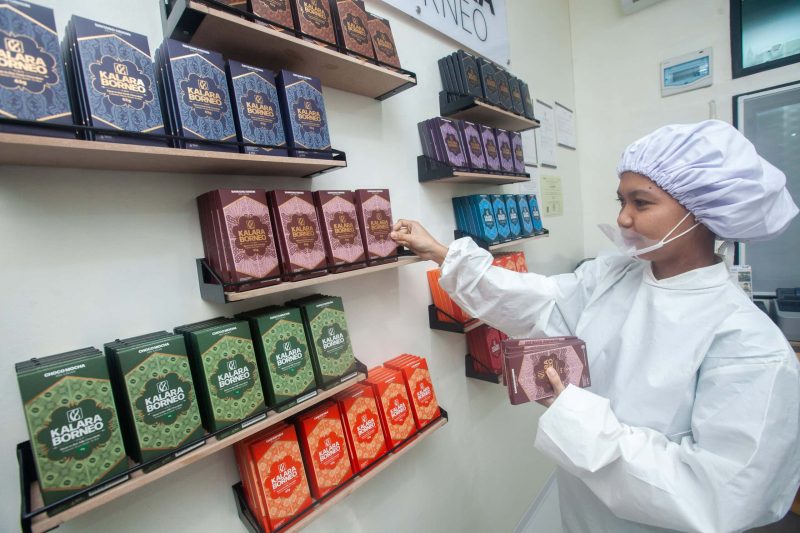
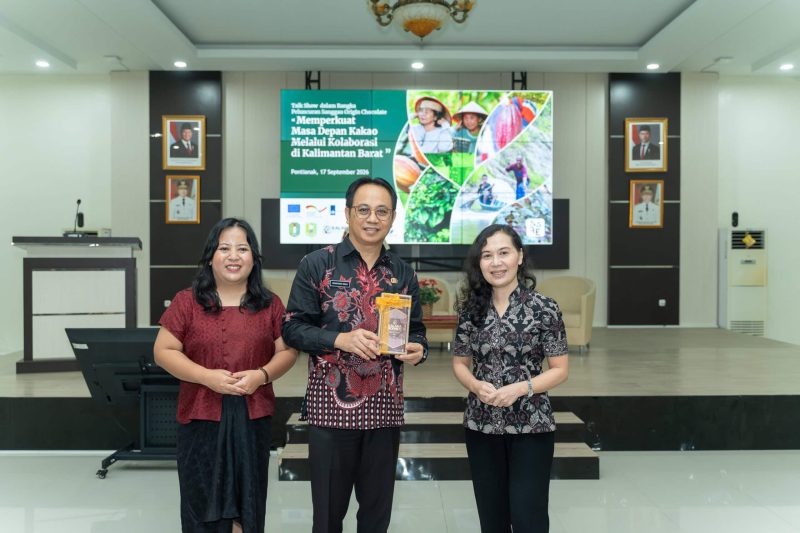
On September 17, 2026, GIZ and Kalara Borneo launched the Sanggau Origin Chocolate Bar, the latest product from the collaboration to build strong, sustainable, and deforestation-free cocoa supply chain in Sanggau, West Kalimantan, Indonesia. The launch was accompanied by a talk show titled „Strengthening the Future of Cocoa Through Collaboration in West Kalimantan“.

The chocolate bar marks an important milestone, but the work behind it began much earlier in Sanggau’s cocoa-growing communities.

„Today we are very proud that West Kalimantan has built a strong cocoa supply chain, from cultivation to processing, and marketing, including international markets. This program does start on a small scale, but it can be a model that can be scaled up to other areas in West Kalimantan,“ said Heronimus Hero, the Assistant for Economy and Development from the Provincial Secretariate of West Kalimantan Province.

Through their partnership, GIZ and Kalara Borneo have strengthened the sustainable deforestation-free production of premium single origin cocoa beans in Sanggau. This support helps farmers improve quality while protecting forests and biodiversity.

The collaboration has also helped farmers prepare to meet the requirements of international markets, particularly in Europe. For years, cocoa production in Sanggau had been neglected, and local communities had few opportunities to sell their beans because reliable markets were lacking.

As the market grows, farmers have greater incentives to invest in sustainable farming practices, conserve biodiversity, and conserve forests. What started as one company and 45 smallholders is creating a demand for sustainably produced, premium-quality cocoa and opening opportunities for more cocoa farming households across the region. It also supports long-term environmental and economic resilience.

The biggest achievement is not chocolate bars itself, but the partnerships and markets that recognize the value of sustainable production.
Tulia: Cocoa Warrior from Sanggau

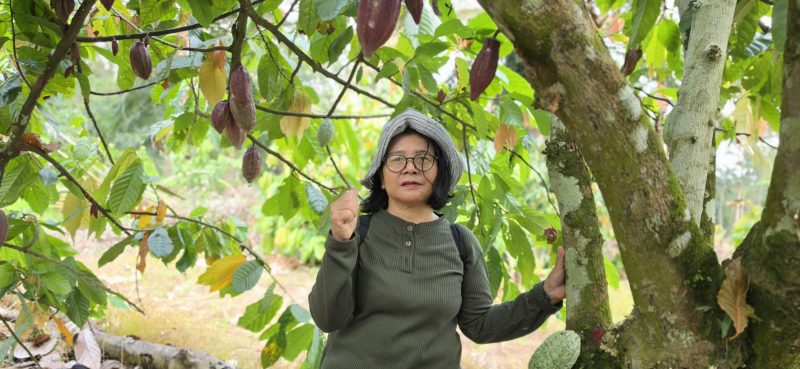
„My cocoa harvest reduced significantly because no one was taking care of it,» said Tulia, a female cocoa farmer from Sanggau, West Kalimantan, Indonesia. After her husband died and her children worked outside the agriculture sector, her cocoa farm was abandoned and productivity declined.

Since 2022, Tulia has joined the Mura Kopa Credit Union (CUMK), which supports cocoa farmers in Sanggau. Since 2025, GIZ and Kalara Borneo, together with Langkau Onet and Kalimajari have provided additional support to farmers assisted by CUMK. This includes Good Agricultural Practices (GAP) and Good Handling Practices (GHP) training, farmer mapping, and post-harvest processing like drying houses and fermentation boxes. These measures help farmers maintain the quality and consistency needed to access international markets.

CUMK’s support, with assistance from GIZ, also promotes tembawang—a traditional agroforestry system practised in West Kalimantan for generations.

After training in pruning, pest and disease management, seedling and shoot grafting, plant rehabilitation, and cocoa agroforestry, Tulia saw her cocoa harvest rise from 40 to 60 kilograms per harvest circle.
20260731_104504 (1)
© GIZ Indonesia

Many cocoa farms in Sanggau have been converted to oil palm, following the sharp decline in cocoa prices. Through the collaboration, Tulia and other CUMK supported chocolate farmers can sell their cocoa to Kalara Borneo, which processes it into Sanggau Origin Chocolate Bar.

Kalara Borneo plans to introduce the product to European markets, creating wider opportunities for single origin cocoa products from Sanggau.

«If you think about it, it is hard, but it can be done,» said Tulia when asked about her experience in cocoa farming. The training, mentoring, and market access opened through this collaboration have made cocoa farming activities the main source of livelihood for her, and other farmers assisted by CUMK.

See more of Tulia’s story and the situation in West Kalimantan, Borneo:

You are currently viewing a placeholder content from Vimeo. To access the actual content, click the button below. Please note that doing so will share data with third-party providers.

More Information
Región:

Luwero, Nakaseke, Kassanda, Mubende, Bukomansimbi, Kyotera, Omoro y Nwoya

Grupo objetivo:

Pequeños agricultores, comerciantes, actores estatales y no estatales y procesadores

Actividades clave:
  • Fortalecimiento de capacidades de los pequeños productores de café en prácticas de producción y gestión sostenible del uso de la tierra.
  • Establecer un sistema de trazabilidad y facilitar el acceso a financiación sostenible
  • Facilitar asociaciones comerciales inclusivas entre organizaciones de productores y actores de la cadena de suministro
  • Promover la cooperación entre múltiples partes interesadas
Materias primas:
Región:

Huánuco, Ucayali, Pasco y Junín

Grupo objetivo:

Actores públicos y privados, especialmente empresas exportadoras, cooperativas y pequeños productores

Actividades clave:
  • Fortalecer las cadenas de suministro para cumplir con los requisitos del EUDR
  • Facilitar el acceso a la financiación sostenible y el intercambio de conocimientos
  • Capacitación de pequeños productores para gestionar sosteniblemente sus sistemas de producción
Materias primas:
Región:

Ngozi y Kayanza

Grupo objetivo:

Pequeños agricultores

Actividades clave:
  • Capacitación sobre el uso de herramientas de trazabilidad y apoyo en la recopilación de datos de geolocalización para el cumplimiento del EUDR
  • Apoyar el desarrollo de un tablero de control del sector cafetalero nacional para la trazabilidad y la transparencia
  • Fortalecimiento de capacidades de pequeños productores de café en prácticas de producción y gestión sostenible del uso de la tierra.
Materias primas:
Región:

Regiones Centro, Suroeste, Litoral, Sur, Este y Oeste

Grupo objetivo:

Pequeños agricultores, mujeres, jóvenes y pueblos indígenas

Actividades clave:
  • Desarrollar alianzas comerciales inclusivas con el sector privado
  • Facilitar el acceso a la financiación para modelos de negocio sostenibles
  • Apoyar y capacitar a los agricultores en sistemas de trazabilidad de código abierto
  • Promover diálogos entre múltiples partes interesadas para mejorar las disposiciones legales y reglamentarias
Materias primas:
Región:

Ecosistema de la cuenca del Kafue (inferior)

Grupo objetivo:

Agricultores y grupos de gestión forestal comunitaria

Actividades clave:
  • Apoyar a los grupos de gestión forestal comunitaria en la gestión sostenible de los recursos naturales y la creación de medios de vida.
  • Apoyar a los agricultores para que produzcan soja de acuerdo con el EUDR y aumenten la productividad, e implementar pilotos de transparencia y trazabilidad
Materias primas:
Región:

Lampung, Kalimantan Occidental y Sulawesi Central

Grupo objetivo:

Pequeños agricultores, sector privado y organizaciones de la sociedad civil a lo largo de las cadenas de valor

Actividades clave:
  • Empoderar a los pequeños agricultores y las organizaciones de agricultores facilitando la trazabilidad y la legalidad, desarrollando capacidades en buenas prácticas agrícolas (BPA) y fortaleciendo las organizaciones de agricultores, asegurando un apoyo inclusivo tanto para los hombres como para las mujeres agricultoras.
  • Promover prácticas sostenibles y colaboración apoyando los esfuerzos de conservación de HCV/HCS de las aldeas, probando y fortaleciendo el Tablero Nacional para la trazabilidad y legalidad, y fomentando intercambios nacionales y regionales.
Materias primas:
Región:

Son La, Gia Lai ​​

Grupo objetivo:

Pequeños agricultores y grupos marginados

Actividades clave:
  • Apoyar a los actores de la cadena de valor del café
  • Fomentar cadenas de suministro libres de deforestación, sostenibles y legales
Materias primas:
Región:

Reserva de la Biosfera Yangambi, Parque Nacional Salonga Norte, Parque Nacional Salonga Sur, Parque Nacional Virunga, Parque Nacional Kahuzi-Biéga

Grupo objetivo:

Sector público y privado

Actividades clave:
  • Promover prácticas agrícolas sostenibles
  • Minimizar la degradación forestal
  • Prevenir la deforestación
Materias primas:
Región:

Provincias de Orellana y Sucumbíos

Grupo objetivo:

Pequeños agricultores, mujeres, pueblos indígenas y jóvenes

Actividades clave:
  • Promoción de diálogos entre múltiples partes interesadas
  • Mejorar los sistemas de trazabilidad
Materias primas:
Región:

Territorio Xingu, Estado de Pará

Grupo objetivo:

Agricultores familiares

Actividades clave:
  • Mejorar el acceso al mercado, la creación de valor y el acceso a financiación sostenible
  • Integrar a los agricultores en los sistemas de trazabilidad.
Materias primas:
Actividades a nivel global