Where the Story Begins
The first thing you will notice in Uganda’s Central region district of Mubende is the shade.
Not long ago, many of the coffee gardens stretched beneath the sun. Today, taller trees rise above the coffee plants, casting shadows across the fields below. There are no signs announcing the change. No plaques. No ceremonies. Just trees.
Yet for thousands of coffee farmers, these trees tell a story about the future.
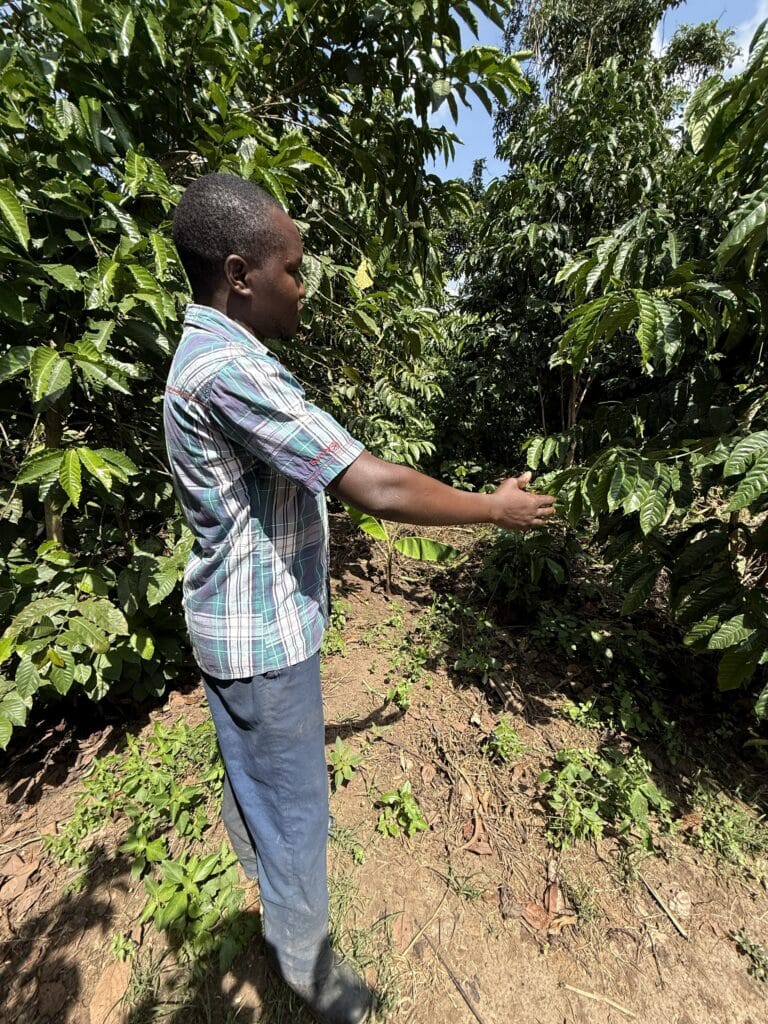
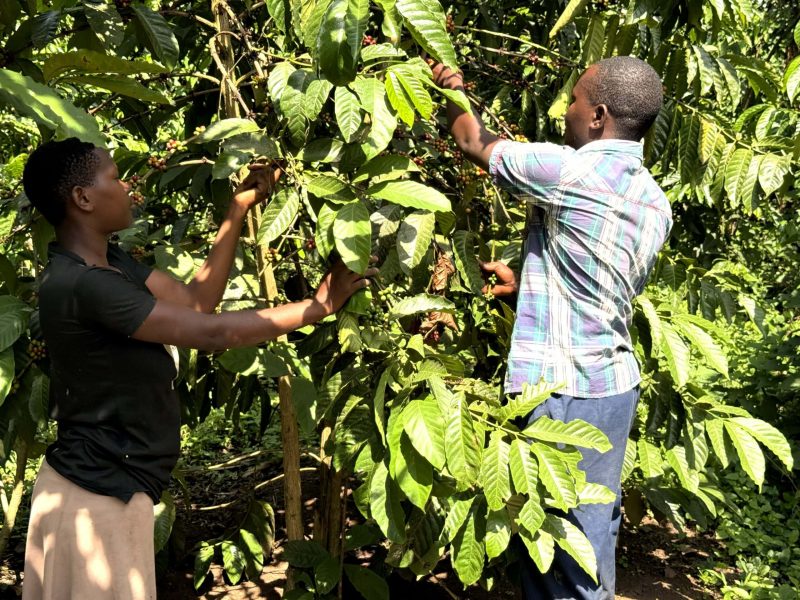
Standing in his coffee garden in Kiseerwa village, Ssekabira Paul pauses to survey the land his family has cultivated for generations. The coffee still grows. The red cherries ripen with the seasons. Harvesting remains a demanding ritual passed from one generation to the next.
But coffee farming itself has changed.
Across East Africa, climate change, shifting consumer expectations, and new international regulations are reshaping one of the world’s most traded commodities. Decisions made in Brussels, Hamburg, London, and New York influence what happens in villages like Kiseerwa.
Today, farmers are being asked to demonstrate how that coffee was grown, where it came from, and what impact its production has had on the environment.
The challenge facing smallholder farmers is straightforward in theory but complex in practice: how do they continue earning a living from coffee while adapting to growing demands for sustainability, traceability, and proof that their crops have not contributed to deforestation?
In Mubende and other coffee-growing districts across Uganda, the answer is beginning to take shape, and the shade trees are one part of it.
They help protect coffee plants from rising temperatures, improve soil quality, retain moisture, and create more resilient farming systems. What appears to be a simple agricultural practice is, in reality, a response to some of the biggest pressures facing coffee production today.
Mulching helps soils retain moisture during increasingly unpredictable weather. Shade trees reduce heat stress. Better soil management improves productivity while protecting long-term fertility. Demonstration farms allow communities to compare traditional practices with newer approaches and witness the results for themselves.
For farmers like Paul, producing coffee is no longer enough.
Learning a New Language of Coffee
Other changes are less obvious.
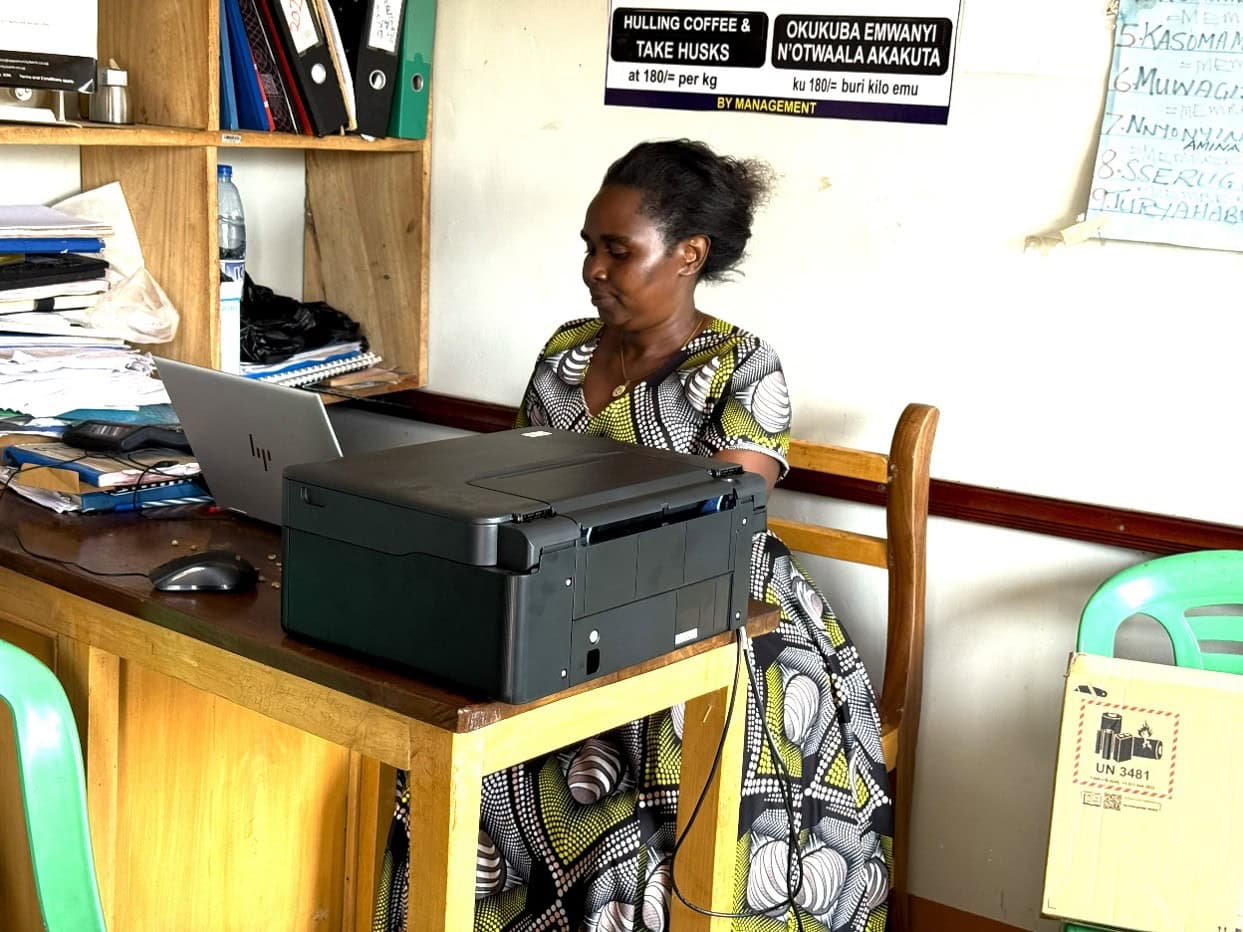
Farmers are learning to map their gardens using GPS technology. They are keeping records, documenting land ownership, and registering farms within digital systems that can trace coffee from a specific plot of land to export markets overseas.
Knowledge that once existed mainly through memory and experience is increasingly being captured through data.
Together, these developments are transforming what it means to be a coffee farmer. The shift is also changing how communities view the natural environment around them.
Across coffee-growing regions such as Mubende, Bukomansimbi and Kyotera, forests are being seen less as land waiting to be cleared and more as assets worth protecting.
One resident described the change simply: «We used to see the forest as something to remove. Now we see it as something that can support us if we take care of it.»
The Power of Working Together
Perhaps the most significant transformation, however, is happening through collective action.
For years, many farmers sold their coffee individually, often with limited bargaining power and little access to market information. Prices fluctuated. Opportunities came and went.
Today, increasing numbers are joining cooperatives and producer groups.
As sustainability requirements become more demanding, these organizations are helping farmers adapt. They provide training, strengthen governance, improve record-keeping, and create systems that allow members to meet standards that would be difficult and expensive to achieve alone.
When farmers pool their coffee, they gain negotiating power. When cooperatives build stronger financial systems and governance structures, they become more attractive to buyers and investors seeking reliable, traceable supply chains.
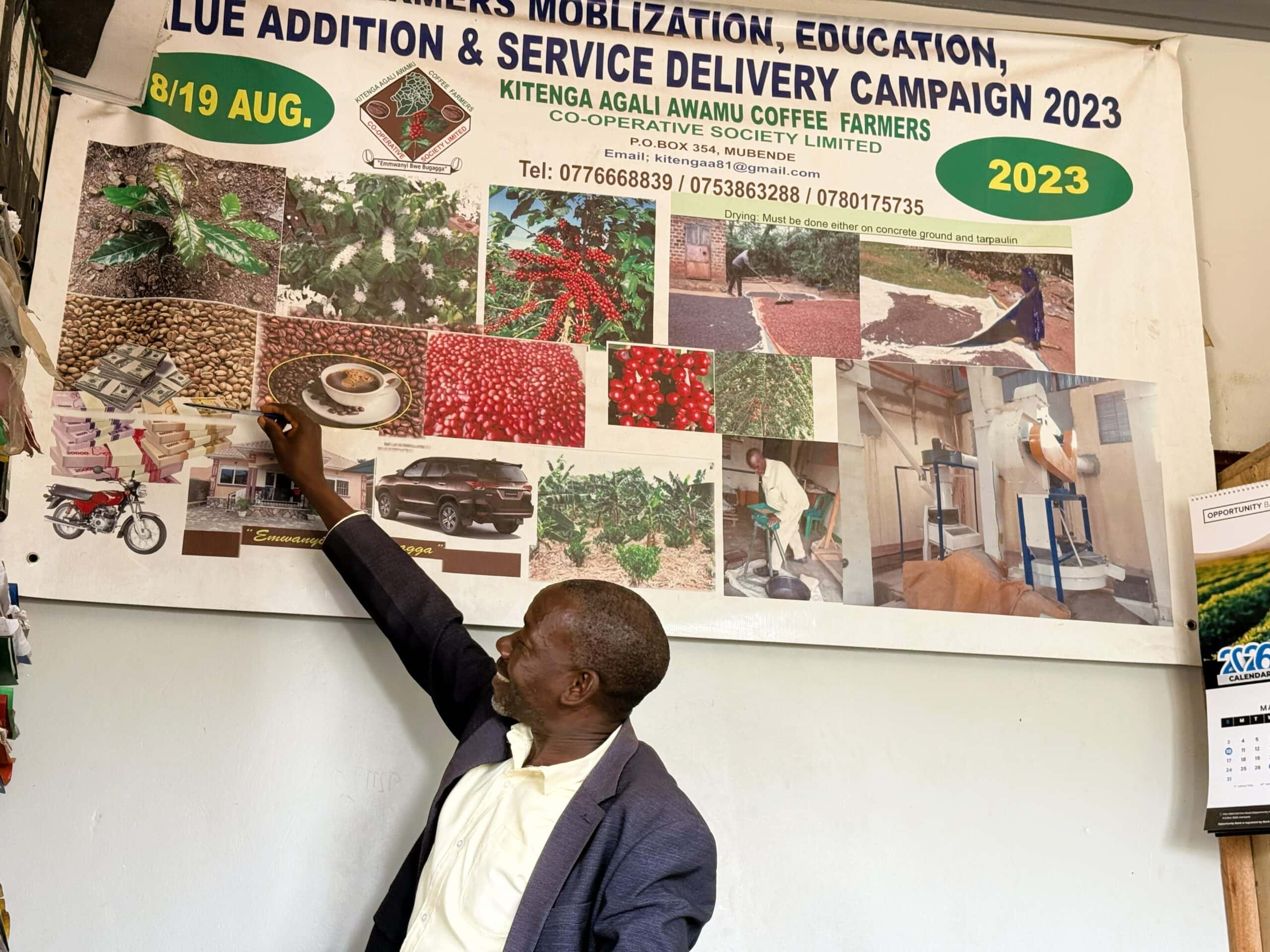
In Mubende, the Kitenga Agali Awamu Cooperative recently secured significant trade financing, providing access to working capital that many farmers could scarcely have imagined a few years ago.
The benefits extend beyond income but equally valuable: confidence.
Confidence to invest. to plan and believe that coffee farming can remain a viable livelihood despite growing uncertainty.
Progress is not always smooth. Some communities remain only partially mapped. Awareness of new requirements varies widely. Institutional coordination can be uneven. Adapting to change takes time.
A Future Growing in the Shade
Back in Kiseerwa, the afternoon sun begins to soften.
Paul walks slowly through his garden, inspecting the coffee trees and the young shade trees growing among them.
There are still uncertainties. Agriculture has never offered guarantees.
Like the shade trees taking root among the coffee plants, that transformation may be gradual. But its impact could shape the future of coffee farming for generations to come.
SAFE Project
SAFE supports Uganda’s transition towards deforestation-free, sustainable, and legally compliant coffee value chains by strengthening the capacity of smallholder farmers, cooperatives, SMEs, and public institutions to meet national and international market requirements, particularly the EU Deforestation Regulation (EUDR). The project promotes EUDR awareness and traceability systems, advances climate-smart coffee production, supports forest conservation through sustainable forest management and agroforestry, strengthens cooperative governance and access to finance, and facilitates market linkages that improve the competitiveness and resilience of Uganda’s coffee sector while safeguarding natural forest ecosystems.